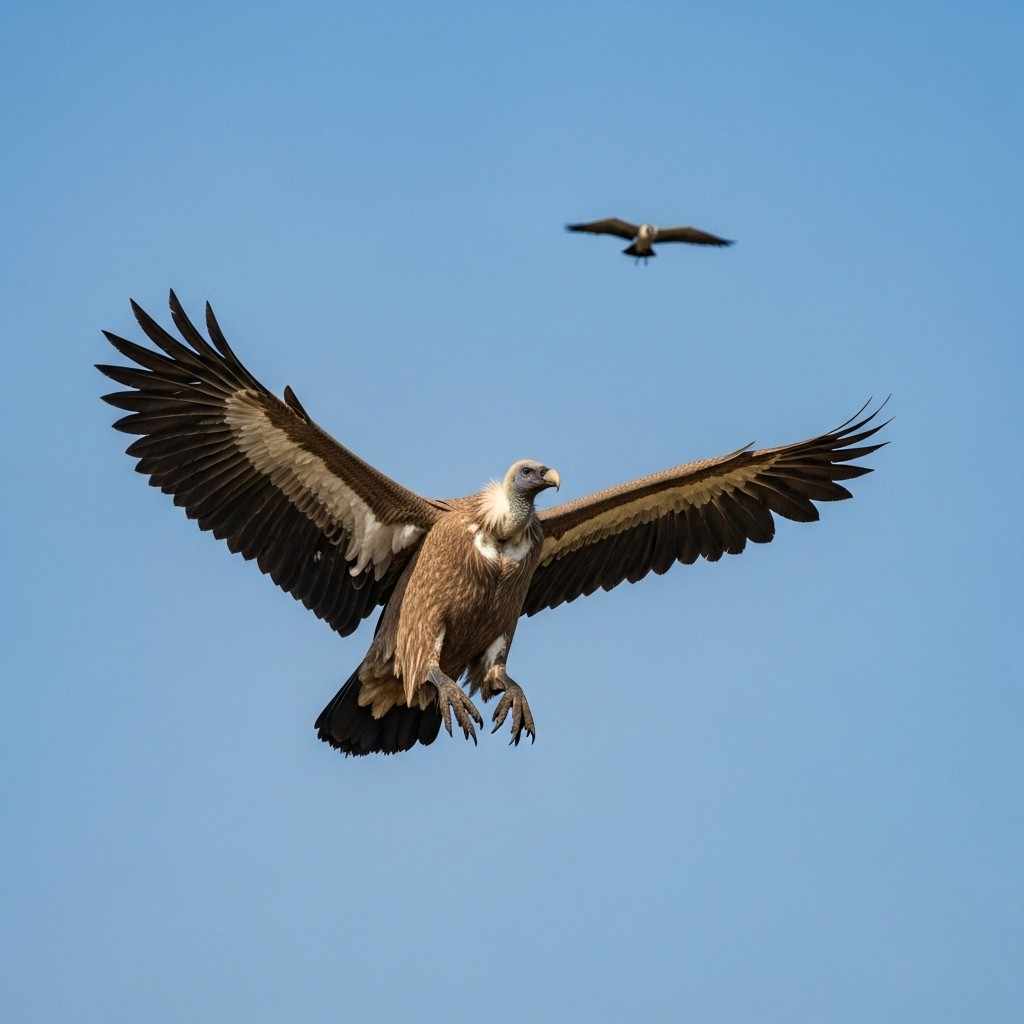
Migratory Griffon Vultures Reappear in Maharashtra’s Forest Ecosystems
Maharashtra’s vulture conservation initiatives have registered an encouraging ecological development with the reappearance of migratory griffon vultures in forest landscapes where the species had not been recorded for nearly a decade. Recent sightings in two major tiger reserves point towards improving habitat stability and the strengthening impact of structured conservation measures.
Significant Sightings in Protected Landscapes
A Himalayan Griffon Vulture was observed in the Melghat Tiger Reserve, followed by the documentation of a Eurasian Griffon Vulture in the Tadoba-Andhari Tiger Reserve. These sightings hold ecological importance as vultures had largely disappeared from both landscapes over the past ten years. The return of migratory scavengers suggests restoration of safe feeding environments and healthier trophic dynamics.
Drivers of Population Collapse
India’s vulture crisis emerged prominently in the early 2000s. Scientific investigations established that veterinary administration of non-steroidal anti-inflammatory drugs (NSAIDs), particularly diclofenac, triggered catastrophic mortality. Vultures consuming carcasses of treated livestock suffered acute kidney failure, leading to rapid population declines across multiple species.
Additional drugs such as aceclofenac and ketoprofen were also implicated, intensifying conservation concerns. The ecological fallout extended beyond biodiversity loss, affecting carcass disposal systems and disease regulation.
Conservation Strategy and Institutional Collaboration
To reverse the decline, the Maharashtra Forest Department collaborated with the Bombay Natural History Society (BNHS), adopting a multi-pronged conservation framework. The strategy combined captive breeding, habitat safeguarding, monitoring programmes and phased releases.
Captive breeding centres have played a central role in stabilising critically endangered species, particularly the long-billed vulture. Conservation actions prioritised minimising toxic exposure and restoring viable wild populations.
Soft Release and Scientific Tracking
In April 2025, 15 long-billed vultures bred at the Vulture Conservation Breeding Centre in Pinjore were relocated to Melghat’s Somthana range. Following acclimatisation within controlled aviaries, the birds were equipped with GSM and satellite transmitters for post-release surveillance.
The phased release conducted in January 2026 incorporated supplemental feeding protocols, gradually reduced to promote independent foraging behaviour. Such “soft release” techniques are critical for improving survival rates and behavioural adaptation.
Ecological Implications of the Return
Researchers interpret the coexistence of released vultures with migratory griffons as a positive ecological signal. It reflects safer scavenging conditions, improved prey availability and reduced toxicological risks. The return of apex scavengers strengthens nutrient recycling processes and stabilises ecological balance.
BNHS currently oversees several hundred vultures across breeding facilities and release landscapes. Expanded release efforts across Melghat, Pench and Tadoba during 2025–26 underscore the scale of recovery planning.
Exam-Focused Points
-
Vulture declines in India linked to veterinary diclofenac usage
-
Himalayan Griffon and Eurasian Griffon are migratory scavengers
-
BNHS leads national vulture conservation and captive breeding programmes
-
Soft release ensures gradual behavioural adaptation
-
Tiger reserves support multi-species ecological restoration
Month: Current Affairs - February 11, 2026
Category: Environment | Biodiversity Conservation