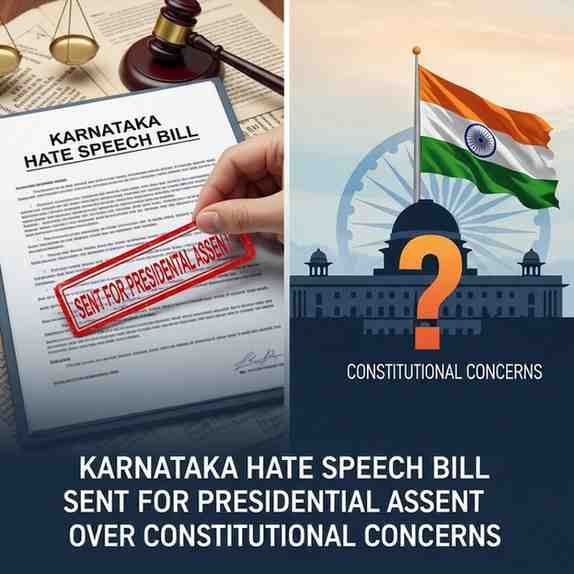
Karnataka Hate Speech Bill Put on Hold Pending Presidential Decision
Karnataka Governor Thaawar Chand Gehlot has reserved the Karnataka Hate Speech and Hate Crimes (Prevention) Bill, 2025 for the consideration of the President of India, effectively halting its implementation for now. The decision follows the passage of the Bill by the Karnataka Legislature during the winter session held in Belagavi in December 2025 and reflects serious constitutional, legal and procedural reservations raised by the Raj Bhavan.
Governor Invokes Constitutional Safeguards
By reserving the Bill, the Governor has exercised powers under Articles 200 and 201 of the Constitution , which allow a Governor to withhold assent and forward a Bill to the President if it appears inconsistent with constitutional provisions or conflicts with existing Central laws. Article 254, which deals with repugnancy between state and central legislation in the Concurrent List, has also been cited, indicating concerns that the Bill may intrude into areas already governed by parliamentary statutes.
Salient Features of the Proposed Legislation
The Bill aims to prevent hate speech and hate crimes by creating an expansive legal framework covering expressions or acts that promote hostility, discrimination or violence against individuals or groups on grounds such as religion, caste, race, gender, sexual orientation, disability or place of birth. It grants the state wide regulatory authority over online platforms, including powers to block, remove or restrict digital content considered hateful.
Stricter Penal Provisions and Collective Accountability
A key aspect of the Bill is the significant enhancement of punishment. Drawing from provisions analogous to Sections 196(1) and 196(2) of the Bharatiya Nyaya Sanhita, it proposes imprisonment of up to seven years even for first-time offenders. Monetary penalties include fines of Rs 50,000 for a first offence and up to Rs 1 lakh for subsequent violations. The Bill also introduces organisational liability, making office-bearers and leaders of associations—registered or otherwise—criminally responsible for hate speech linked to activities conducted under their platform.
Important Facts for Exams
-
Governors can reserve state Bills for presidential assent under Articles 200 and 201
-
The Bill proposes expanded definitions of hate speech across identity markers
-
Several offences are proposed to be made non-bailable
-
Organisational and leadership liability is a central feature of the Bill
Concerns on Vagueness, Rights and Procedure
The Governor’s note highlights apprehensions that the definition of hate speech is overly broad and may encompass legitimate speech, academic debate or critical commentary. Raj Bhavan reportedly received around 40 representations opposing the Bill, warning of potential misuse and selective enforcement. Procedural issues were also flagged, including limited public consultation, insufficient interdepartmental review and inadequate legislative debate. These, the Governor observed, could raise constitutional concerns under Articles 14, 19 and 21 , as well as issues of inconsistency with existing Central laws.
The Bill will now await the President’s decision, which may include granting assent, withholding assent, or returning it to the state legislature for reconsideration.
Month: Current Affairs - February 02, 2026
Category: State Legislation | Fundamental Rights