US Invites India to Join Proposed ‘Board of Peace’ for Post-War Governance in Gaza
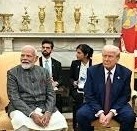
US President Donald Trump has reportedly invited India to join a proposed international “Board of Peace” aimed at overseeing post-war governance, reconstruction, and long-term stabilisation of Gaza . The proposal forms part of Trump’s broader ceasefire initiative and a 20-point Comprehensive Plan designed to manage Gaza’s transition from conflict to structured governance.
The move places India among a select group of potential stakeholders in shaping post-conflict arrangements in one of the world’s most geopolitically sensitive regions.
India’s Strategic Relevance in the Gaza Plan
India’s inclusion is viewed as strategically significant due to its balanced West Asia policy . New Delhi maintains a close strategic partnership with Israel while continuing diplomatic engagement and humanitarian support for Palestine .
India was among the first countries to dispatch humanitarian assistance to Gaza via Egypt after hostilities escalated, reinforcing its credentials as a credible and relatively neutral stakeholder . This positioning enhances India’s acceptability in multilateral initiatives aimed at regional stability and reconstruction.
Structure and Mandate of the Board of Peace
According to the White House , the proposed Board of Peace would function as the central strategic authority guiding Gaza’s post-war transition. Chaired by Donald Trump, the board is expected to focus on:
-
Governance capacity-building
-
Regional and international coordination
-
Reconstruction planning
-
Investment mobilisation
-
Oversight of large-scale funding mechanisms
Reports indicate that confirmed or proposed members include senior US officials, international financiers, and former global leaders , suggesting a hybrid model combining political authority and economic oversight .
Global Reactions and Geopolitical Sensitivities
The initiative has elicited cautious responses from the international community. So far, Hungary is the only country reported to have publicly accepted the invitation. Several governments are reportedly hesitant, expressing concerns that the proposed structure could dilute or bypass the traditional role of the United Nations in conflict resolution and post-war administration.
The absence of explicit UN leadership has emerged as a key point of diplomatic sensitivity.
Israeli Concerns and Executive Board Proposal
In parallel, reports suggest the creation of a separate 11-member “Gaza Executive Board” , comprising regional and international figures to handle operational governance. However, the office of Israeli Prime Minister Benjamin Netanyahu has raised objections, stating that the board’s composition was not coordinated with Israel .
Israeli officials have also flagged concerns over the involvement of certain countries, particularly Turkey , and Israel’s strained relations with Qatar , arguing that the proposed structure conflicts with Israel’s security and diplomatic positions.
Broader Implications
If India accepts the invitation, it would mark a significant expansion of its diplomatic footprint in West Asia , moving beyond humanitarian assistance to active participation in post-conflict governance frameworks. The decision will likely be weighed against India’s longstanding support for a rules-based international order , its commitment to multilateralism, and the evolving dynamics of Middle East geopolitics.
Exam-Focused Points
-
Gaza is administered separately from the Palestinian Authority in the West Bank.
-
India recognises Palestine as a state while maintaining strong ties with Israel .
-
The proposed Board of Peace combines political leadership and financial oversight.
-
United Nations has traditionally played a central role in Middle East peace processes.
-
Only Hungary has publicly accepted the invitation so far.
Month: Current Affairs - Jan 19, 2026
Category: International Relations | West Asia