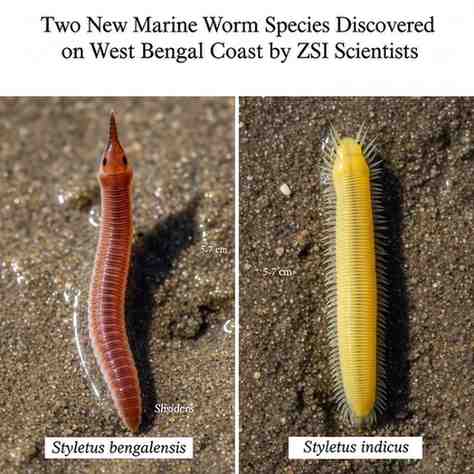
New Marine Species Identified Along West Bengal’s Impacted Shoreline
Scientists have reported the discovery of two previously undocumented marine worm species along the northern Bay of Bengal coast, demonstrating that ecologically significant life persists even in areas exposed to heavy anthropogenic pressure. The finding highlights the need for sustained biodiversity assessments in India’s densely used coastal belts.
Survey Sites and Research Collaboration
Field investigations were conducted around Digha and Bankiput in Purba Medinipur district by teams from the Zoological Survey of India (ZSI) in collaboration with international specialists. The study area is characterised by fishing activity, coastal infrastructure and pollution loads, making the identification of new taxa particularly noteworthy for marine conservation planning.
Taxonomic Description and Nomenclature
The species were formally described in the Journal of Natural History under a paper detailing two new nereidid polychaetes from eastern India. One worm, Namalycastis solenotognatha , is named for its distinctive grooved jaw morphology. The second, Nereis dhritiae , honours Dhriti Banerjee, recognising her contributions to faunal research leadership in India. Detailed morphological analysis and comparative taxonomy were used to confirm their novelty.
Adaptation to Stressful Microhabitats
Researchers recorded N. solenotognatha inhabiting sulfide-rich mudflats, often associated with decaying mangrove wood and compact clay substrates. N. dhritiae was located within submerged wooden structures along sandy intertidal zones during high tide cycles. These niches suggest physiological tolerance to low-oxygen, chemically stressed environments, reflecting specialised ecological adaptation.
Functional Importance in Coastal Ecosystems
Nereidid polychaetes are benthic engineers that enhance sediment turnover, improve oxygen penetration and facilitate nutrient recycling. Their continued presence in disturbed habitats indicates that key ecosystem processes remain active despite environmental degradation. The species may therefore serve as practical bioindicators for long-term coastal health monitoring.
Implications for Conservation and Monitoring
The discovery reinforces that urban-adjacent and industrially influenced shorelines can still harbour undocumented biodiversity. Continued systematic sampling, pollution mitigation and habitat mapping are essential to understand population stability and to integrate such resilient taxa into regional conservation frameworks across the northern Bay of Bengal.
Exam-Focused Points
-
Two new nereidid worm species were discovered near Digha and Bankiput in West Bengal.
-
Zoological Survey of India (ZSI) led the research with international collaboration.
-
Polychaete worms are widely used as indicators of marine ecosystem condition.
-
Nereidids contribute to nutrient cycling and sediment aeration in coastal habitats.
-
Species were described in the Journal of Natural History through formal taxonomic study.
Month: Current Affairs - February 10, 2026
Category: Environment & Biodiversity