A New Chapter in India’s Ride-Hailing Ecosystem
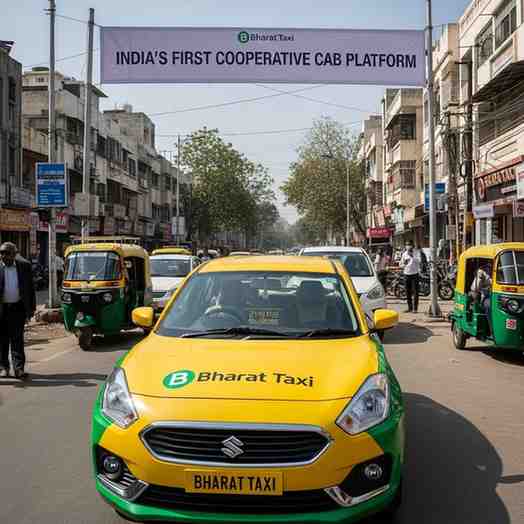
India’s app-based mobility landscape is poised for a structural shift with the launch of Bharat Taxi in New Delhi on 5 February . Conceived as a driver-owned cooperative cab service , the initiative seeks to provide an alternative to private aggregators by prioritising fair earnings, collective ownership, and long-term driver security.
The platform positions itself as a socially driven competitor to established ride-hailing services, addressing long-standing concerns around commissions and income volatility.
Government Support and Official Launch
The Bharat Taxi app was formally launched by Amit Shah , Union Minister of Cooperation. Calling it a landmark initiative for driver empowerment, the minister highlighted that the cooperative structure enables drivers to move beyond being service providers to becoming co-owners and stakeholders .
The launch aligns with the government’s broader effort to extend the cooperative movement into emerging service sectors and platform-based economies.
How the Cooperative Ownership Model Works
Bharat Taxi operates through Sahakar Taxi Cooperative Limited , a driver-led cooperative supported by professionals with experience in successful cooperative institutions such as Amul .
Key features of the model include:
-
Drivers, known as ‘Sarathis’ , are cooperative members
-
Each Sarathi holds five shares in the cooperative
-
Decision-making and profits are collectively shared
-
The platform is managed on principles of transparency and mutual benefit
This structure ensures that value generated by the platform remains within the driver community.
How Bharat Taxi Differs from Private Aggregators
Unlike private ride-hailing platforms that charge commissions on every trip, Bharat Taxi follows a fixed-cost access model . Drivers pay a daily fee of ₹30 to use the app, with no per-ride commission deductions .
This approach directly addresses key driver grievances related to:
-
High commission rates
-
Unpredictable take-home income
-
Limited bargaining power
By keeping costs predictable, the cooperative aims to enhance driver earnings and financial stability.
Impact on Drivers and Urban Mobility
The introduction of Bharat Taxi is expected to benefit thousands of drivers by offering ownership rights, transparent costs, and income predictability . For commuters, the service promises a fair-priced and socially responsible alternative in urban transport.
If adopted at scale, the cooperative cab model could increase competition in India’s ride-hailing market and encourage more people-centric digital platforms , reshaping the future of urban mobility.
Exam-Focused Key Points
Month: Current Affairs - February 05, 2026
Category: Cooperative Federalism | Governance