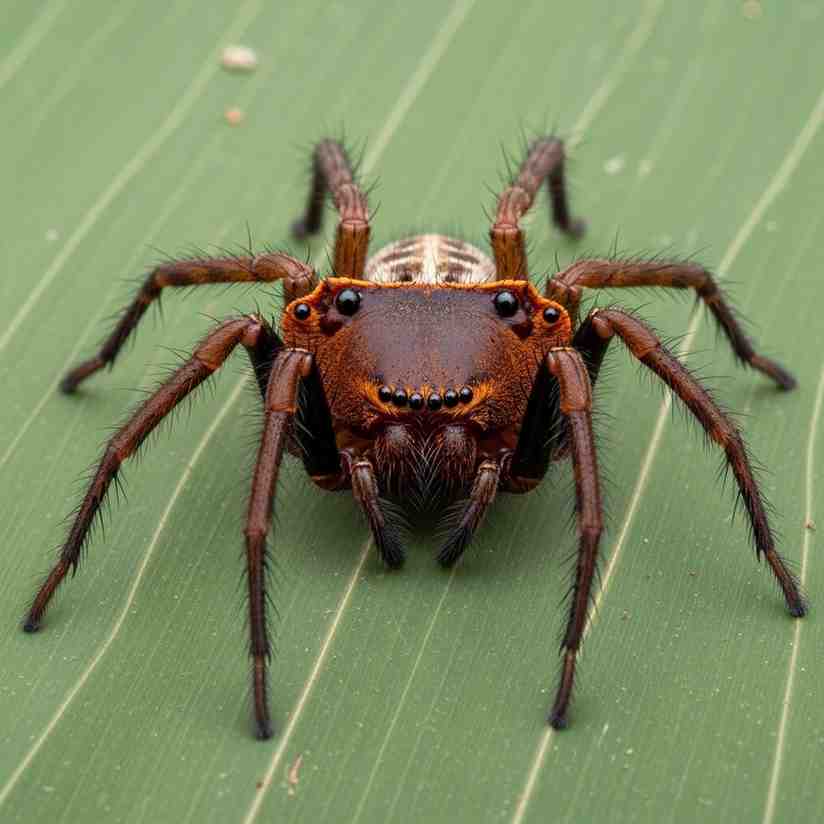
Rare Trapdoor Spider Identified in Kolhapur
A previously unknown trapdoor spider species has been documented from the grassland habitats of Maharashtra’s Kolhapur district, drawing attention to the ecological value of peri-urban landscapes and the pressures they face from rapid land-use change. The discovery reinforces the region’s status as a biodiversity hotspot while raising concerns about habitat loss.
Taxonomy and Research Collaboration
The species has been formally named Titanidiops kolhapurensis , referencing its geographic origin. Its scientific description appeared on February 4 in the UK-based Journal of Natural History . The work was carried out through a collaboration between the Thackeray Wildlife Foundation and Shivaji University, Kolhapur, as part of doctoral research led by Satpal Gangalmale under the guidance of entomologist Sunil Gaikwad. Detailed morphological analysis placed the spider within the Titanidiops genus.
Distinctive Behaviour and Morphology
Locally known as “darkari koli,” trapdoor spiders construct silk-lined burrows sealed by a hinged, camouflaged lid. The newly described species exhibits diagnostic features in its cheliceral dentition and the configuration of its eight eyes. It typically excavates vertical or slightly inclined tunnels in grassy meadows, with entrances engineered to blend seamlessly into surrounding soil and vegetation—an adaptation that aids ambush predation and predator avoidance.
Narrow Distribution Across Select Sites
Field surveys have so far recorded the species only from a handful of locations, including the Shivaji University campus, Shenda Park, the Chitranagari vicinity, and Puikhadi hill. Populations appear stable where native grasslands and mixed natural vegetation persist. Notably, the spider was not detected in areas dominated by exotic tree stands such as Gliricidia sepium , indicating sensitivity to altered habitat structure.
Conservation Implications for Grassland Ecosystems
Researchers caution that the spider’s restricted range makes it vulnerable to local extinction. Ongoing urban expansion, infrastructure development, intensive farming, and the spread of non-native plantations are fragmenting suitable habitats around Kolhapur. The finding underscores the need to recognise grasslands as priority conservation landscapes alongside forests, with targeted measures to preserve native vegetation and soil integrity.
Exam-Focused Points
-
Titanidiops kolhapurensis is a newly described trapdoor spider from Kolhapur, Maharashtra .
-
Trapdoor spiders belong to ancient mygalomorph lineages known for burrow-dwelling behaviour.
-
Diagnostic identification relied on cheliceral tooth patterns and eye arrangement .
-
Exotic plantations (e.g., Gliricidia sepium ) can reduce native invertebrate diversity.
-
Grasslands function as critical yet often under-protected ecosystems supporting specialised fauna.
Month: Current Affairs - February 10, 2026
Category: Environment & Biodiversity