India Reaffirms Linguistic Diversity at Third International Conference on Indian Languages
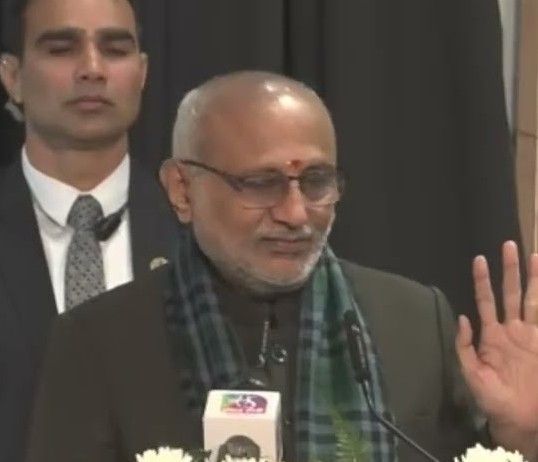
India reaffirmed its deep civilisational commitment to linguistic diversity with the inauguration of the Third International Conference on Indian Languages in New Delhi. The event was inaugurated by C. P. Radhakrishnan , who emphasised that Indian languages are not merely tools of communication but living carriers of history, democracy, and collective wisdom. Scholars, linguists, policymakers, and international delegates gathered to reflect on preservation, research, and global cooperation related to India’s vast linguistic heritage.
Language as the Living Memory of Civilisation
In his address, the Vice-President described language as the conscience of civilisation , holding within it generations of memory, values, and knowledge systems. He traced the journey of Indian languages from ancient stone inscriptions and palm-leaf manuscripts to contemporary digital scripts, noting how they have safeguarded philosophy, science, medicine, literature, and ethical thought.
Recalling his participation in Siddha Day celebrations in Chennai, he highlighted palm-leaf manuscripts as enduring evidence of India’s multilingual intellectual traditions, many of which continue to inform modern research and cultural understanding.
Unity Strengthened by Linguistic Diversity
Rejecting the idea that linguistic plurality weakens national unity, the Vice-President stressed that India’s many languages have historically reinforced a shared civilisational identity and common Dharma. He observed that Indian languages have made lasting contributions across fields such as governance, spirituality, science, and healthcare.
Drawing from his experience as Chairman of the Rajya Sabha , he noted with approval the increasing practice of Members of Parliament speaking in their mother tongues , calling it a sign of democratic confidence and inclusiveness.
Constitutional Recognition and Democratic Inclusion
The Vice-President referred to the recent release of a translated copy of the Constitution of India in the Santhali language by Droupadi Murmu , describing it as a landmark step for linguistic inclusion. He underscored that the Eighth Schedule of the Constitution symbolises respect for linguistic diversity and affirms that unity in India is built on mutual respect rather than uniformity.
He remarked that democracy thrives when citizens are able to express themselves in their own language, ensuring deeper participation and stronger ownership of democratic institutions.
Preserving Languages in the Digital Age
Addressing global concerns over the decline of indigenous and minority languages, the Vice-President highlighted the importance of international collaboration in research and manuscript preservation. He pointed to policy initiatives under Narendra Modi , including the National Education Policy 2020 and the Gyan Bharatam Mission , as key frameworks for protecting and revitalising linguistic heritage.
He advocated the use of digital archives, AI-based translation tools, and multilingual digital platforms to ensure that Indian languages remain relevant in contemporary life and continue to shape future knowledge systems.
Why the Conference Matters
The Third International Conference on Indian Languages reflects India’s broader vision of cultural continuity combined with modern innovation. By bringing together global scholars and institutions, the conference strengthens efforts to document, digitise, and revitalise languages while reinforcing their role in democracy, education, and global knowledge exchange.
Quick Facts for Exams
Month: Current Affairs - January 10, 2026
Category: broader theme of linguistic heritage