Image

World Hindi Day: From People’s Speech to a Global Cultural Voice

Languages are more than instruments of communication; they embody history, social struggle, and collective imagination. Hindi, today among the world’s most widely spoken languages, did not emerge through royal decree or institutional imposition. Its journey has been gradual, democratic and deeply rooted in popular life. Observed every year on January 10, World Hindi Day commemorates the First World Hindi Conference held in Nagpur in 1975, when Hindi was consciously projected as a global language. The occasion invites reflection on how a people’s language acquired international voice and relevance.

Month: 

Category: 

Can Mann Ki Baat Turn Antimicrobial Resistance into a National Movement?

When Prime Minister Narendra Modi spoke about antimicrobial resistance (AMR) in the December 28, 2025 episode of Mann Ki Baat, he elevated a largely technical public-health concern into a subject of national conversation. For years, India’s AMR crisis has been acknowledged by experts but ignored by the public. Whether this intervention becomes a transformative moment or merely a symbolic warning will depend on how decisively recognition is converted into action.

Month: 

Category: 

Revising India’s National Accounts: Separating Methodological Debate from Mistrust

As India prepares for another round of base-year revision and methodological updates in its national accounts, questions around the credibility of official economic data have resurfaced. Such scrutiny is not only inevitable but desirable in a democracy. However, the quality of debate matters. Since the shift to the 2011–12 base year, criticisms of India’s GDP estimates have broadly fallen into four distinct categories. Distinguishing between them is essential to separate legitimate analytical concerns from selective or speculative claims.

Month: 

Category: 

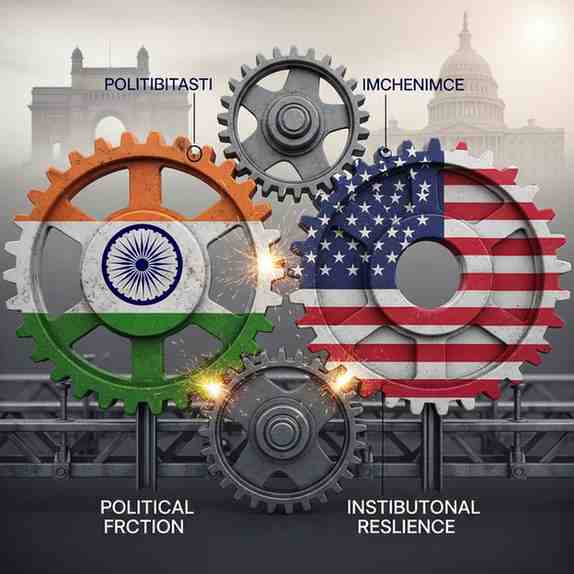
India-United States Relations in 2025: Political Friction, Institutional Resilience

In 2025, India–United States relations present a complex and seemingly contradictory picture. On the surface, political ties appear strained, shaped by trade frictions, sanctions, and diplomatic unease symbolised by the postponement of the Quad Leaders’ Summit that India was expected to host. Yet beneath this turbulence lies a more stable and enduring reality: the institutional foundations of the bilateral relationship remain strong, functional, and steadily expanding.

Month: 

Category: 

Bail, Conspiracy and Liberty: The Supreme Court’s Recalibration under UAPA

On January 5, 2026, the Supreme Court of India delivered a judgment that will significantly influence how Indian courts balance civil liberties against national security. By refusing bail to student activists Umar Khalid and Sharjeel Imam in the alleged “larger conspiracy” behind the February 2020 Delhi riots, the Court underscored a hard constitutional truth: once an offence is framed under the Unlawful Activities (Prevention) Act, bail jurisprudence shifts from ordinary criminal law to a far stricter statutory terrain.

Month: 

Category: