Image

Sacred Relics and Modern Museums: Rethinking India’s Stewardship of Living Heritage

Living Relics and the Challenge of Modern Stewardship

The recent reunification of ancient gems associated with the corporeal remains of the historical Buddha—excavated more than a century ago at Piprahwa in present-day Uttar Pradesh—has revived a fundamental question for India’s cultural institutions: how should objects that are simultaneously archaeological artefacts and living objects of faith be cared for? Acquired from an overseas seller by an Indian conglomerate and handed over to the government, these relic-associated gems are now on public display in Delhi. What follows this exhibition will test India’s ability to reconcile modern museology with deeply rooted spiritual traditions.

Month: 

Category: 

Sahkar Se Samriddhi: Reimagining India Cooperative Movement for Inclusive Growth

India’s Cooperative Movement and the Promise of Shared Prosperity

India’s cooperative movement draws strength from a civilisational ethic that views economic life as a collective endeavour. The idea of Vasudhaiva Kutumbakam—the world as one family—has long shaped India’s understanding of welfare, participation and shared responsibility. In 2025, as the world observes the International Year of Cooperatives, India’s renewed focus on the cooperative sector under the vision of Sahkar Se Samriddhi reflects an attempt to align this tradition with the demands of a modern, market-linked economy.

Month: 

Category: 

Symbolism vs Law: Why Trump Cannot Receive a Nobel Peace Prize by Proxy

The Nobel Peace Prize, Political Symbolism and the Limits of Transfer

The Nobel Peace Prize occupies a unique space in global public life. It is at once a legal honour governed by strict statutes and a powerful symbol frequently invoked in international politics. This tension was on full display last week when US President Donald Trump received a Nobel Peace Prize medal from Venezuelan opposition leader María Corina Machado during her visit to the White House. The gesture sparked controversy not only because of its political overtones, but also because it raised a fundamental legal question: can a Nobel Prize be transferred at all?

Month: 

Category: 

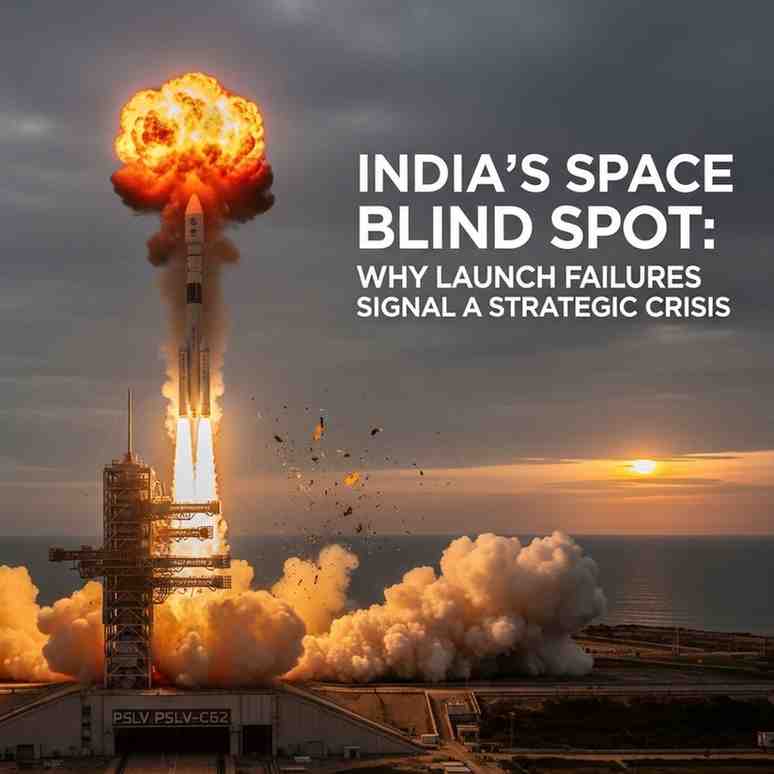
PSLV-C62 and India’s Space Blind Spot: Why Launch Failures Signal a Strategic Crisis

PSLV-C62 and India’s Strategic Space Deficit

The failure of the PSLV-C62 mission is not merely a technical setback for the Indian Space Research Organisation (ISRO). It is a warning about deeper structural weaknesses in India’s space ecosystem at a moment when space has become central to economic competitiveness, military effectiveness, and strategic autonomy. As space increasingly underpins outcomes across land, sea, air, cyber and information domains, India’s relative slippage carries consequences far beyond prestige.

Month: 

Category: 

Indus Waters Treaty and the Limits of Hydro-Diplomacy in India–Pakistan Relations

Indus Waters and Strategic Reality: How Much Leverage Does India Really Have?

External Affairs Minister S Jaishankar’s remarks at IIT Madras, echoing Prime Minister Narendra Modi’s assertion that “blood and water cannot flow together”, have once again brought the Indus rivers into sharp political focus. The statement reflects India’s anger over decades of cross-border terrorism, but it also raises a harder, more technical question: beyond rhetoric, how much leverage does India actually possess over the waters that flow into Pakistan?

Month: 

Category: