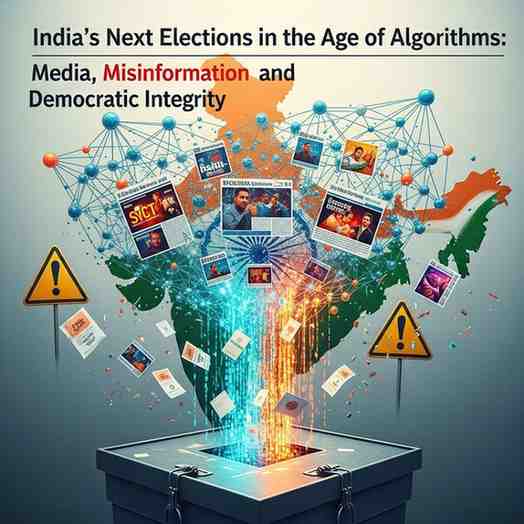
further collapse the distinction between reality and fabrication.
Deepfakes pose a unique challenge: they undermine trust itself. When any audio or video can be dismissed as fake—or believed uncritically—public confidence in shared facts erodes. Democratic debate depends on a minimum consensus about reality; deepfakes threaten that foundation.
Regulatory gaps and institutional strain
The constitutional responsibility for ensuring free and fair elections lies with the Election Commission of India . Yet regulatory frameworks for digital campaigning, political advertising transparency and AI-generated content remain underdeveloped. Existing responses are largely reactive, struggling to keep pace with rapidly evolving technologies.
Without clearer standards for platform accountability, disclosure of sponsored content, and safeguards against synthetic manipulation, institutional credibility risks erosion. The challenge is not censorship, but proportional regulation that preserves free speech while protecting electoral integrity.
Conclusion: a rehearsal for the future
The 2026 Assembly elections may serve as a rehearsal for a more disruptive future, including what many already describe as an “AI election” later in the decade. India’s democracy has repeatedly demonstrated resilience, but resilience cannot be taken for granted. As media technologies evolve, so must democratic safeguards.
The central question is no longer whether media influences elections—it always has—but whether institutions, platforms and citizens can adapt quickly enough to ensure that persuasion does not become deception, and participation does not give way to manipulation. How India navigates this transition will shape not just the next election cycle, but the credibility of democratic choice itself in the digital age.
Month: Current Affairs - January 18, 2026
Category: