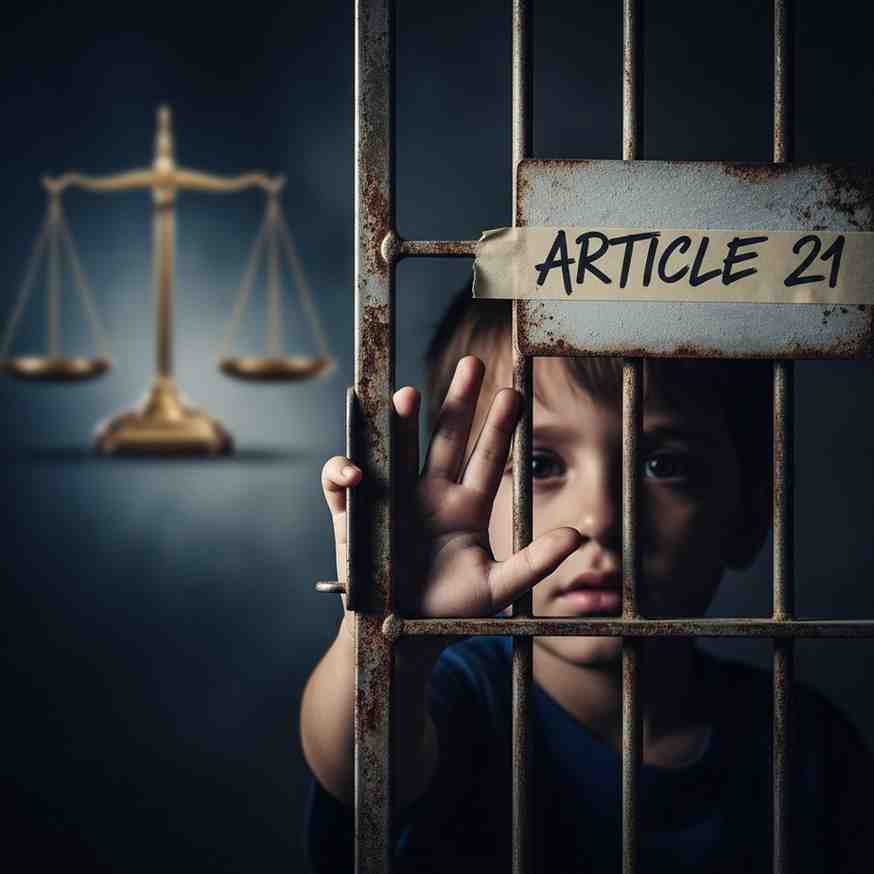
Child Trafficking, Article 21 and the Search for Real Justice
Child trafficking remains one of the gravest contradictions to India’s constitutional promise of dignity, equality and protection for every child. Despite a robust legal framework and frequent rescue operations, trafficking networks continue to thrive, shielded by weak investigations and low conviction rates. In this context, the Supreme Court’s recent judgment in K. P. Kiran Kumar vs State marks an important constitutional moment. By holding that child trafficking amounts to a gross violation of the right to life under Article 21, the Court has reframed the issue—not merely as a criminal offence, but as a direct assault on fundamental rights.
The disturbing gap between rescue and justice
Official data reveals a troubling paradox. According to the National Crime Records Bureau , thousands of trafficked children are rescued every year. In 2022 alone, over 3,000 children below the age of 18 were rescued, while between April 2024 and March 2025 more than 53,000 children were freed from child labour, trafficking and kidnapping. Yet, between 2018 and 2022, conviction rates for trafficking-related offences hovered at a mere 4.8%.
This disconnect exposes systemic failures: poorly documented investigations, fragile evidence chains, lack of witness protection, and prolonged trials that exhaust victims and their families. Rescue, without justice, risks becoming symbolic rather than transformative.
Legal understanding of child trafficking
Internationally, the Palermo Protocol defines child trafficking as the recruitment, transportation or harbouring of a child for exploitation, rendering consent legally irrelevant. Indian law reflects this principle. Under the Bharatiya Nyaya Sanhita, trafficking for exploitation—whether through coercion, deception or abuse of vulnerability—is criminalised in broad terms, covering sexual exploitation, forced labour, slavery and even organ removal.
This expansive definition recognises that trafficking is not static; it evolves with economic pressures, migration patterns and technological change.
Constitutional and statutory protections
India’s Constitution provides a powerful normative foundation. Articles 23 and 24 prohibit trafficking, forced labour and hazardous employment of children, while Article 39 of the Directive Principles obligates the State to protect children from abuse and exploitation and ensure conditions of dignity.
Statutory law reinforces this mandate. Provisions of the Bharatiya Nyaya Sanhita criminalise buying and selling of minors; the Immoral Traffic (Prevention) Act addresses sexual exploitation; and the Juvenile Justice Act treats trafficked children as victims entitled to care, protection and rehabilitation.
The central role of POCSO
The Protection of Children from Sexual Offences Act (POCSO) occupies a critical place in this ecosystem. It defines sexual offences comprehensively, is gender-neutral, and prescribes stringent punishments, including life imprisonment. To address chronic delays, nearly 400 fast-track POCSO courts have been established. However, uneven infrastructure and staffing shortages continue to dilute their deterrent impact.
Judicial evolution and the latest ruling
The Supreme Court has consistently viewed child trafficking as a structural social problem rather than a narrow criminal issue. Earlier rulings addressed child prostitution, hazardous labour and large-scale trafficking, emphasising prevention, rescue and rehabilitation.
The judgment in K. P. Kiran Kumar advances this jurisprudence by explicitly linking trafficking to Article 21. By doing so, the Court has elevated enforcement from statutory discretion to constitutional duty, mandating stricter accountability from investigative agencies and trial courts.
Why trafficking persists
Despite strong laws, trafficking thrives on vulnerability. Poverty, unemployment, migration, disasters and weak family support systems push children into high-risk situations. Increasingly, traffickers exploit digital platforms to lure children with false promises of jobs or fame. Inter-State jurisdictional gaps further aid trafficking networks, allowing them to evade detection.
From rescue to deterrence
The Court’s message is unambiguous: rescuing children is not enough. Effective deterrence requires credible investigations, victim-sensitive trials, witness protection and faster convictions. Stronger Union–State coordination and long-term rehabilitation are equally essential.
Ultimately, child trafficking is not just a crime against individuals; it is an assault on the constitutional conscience of the Republic. Translating rescue into justice is the only way to honour the promise of Article 21 and ensure that protection of children moves from intent to impact.
Month: Current Affairs - Jan 21, 2026
Category: