Overview
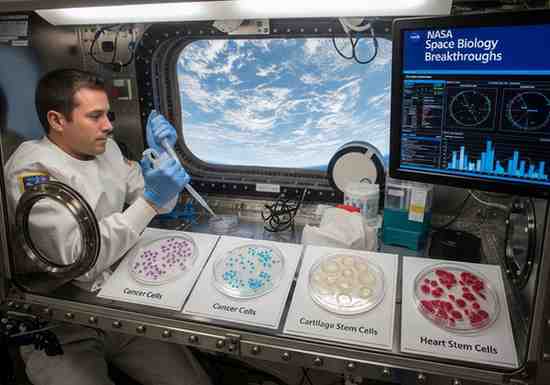
In May 2026, NASA astronauts aboard the International Space Station (ISS) conducted exciting biomedical experiments. They worked on cancer treatments, cartilage tissue growth, heart stem cells, and DNA-inspired nanomaterials. All this work happened during Expedition 74. The astronauts used the Japanese Kibo laboratory module and its Life Science Glovebox. These space-based studies help us understand diseases and develop new medicines.
Latest News: Biomedical Research on the ISS
NASA astronauts are very busy on the International Space Station. In May 2026, they carried out several biomedical experiments. The focus areas were:
-
Cancer therapeutics (drugs to treat cancer)
-
Cartilage tissue growth (the soft tissue in joints and nose)
-
Heart stem cells (cells that can repair heart damage)
-
DNA-inspired nanomaterials (tiny materials for future medicines)
The work took place during Expedition 74. The astronauts used the Kibo laboratory module, which is Japan’s part of the ISS. They also used a special tool called the Life Science Glovebox. This glovebox allows safe handling of biological samples in microgravity.
Space Cancer Therapeutics in Microgravity
NASA Flight Engineer Chris Williams worked hard in May 2026. He set up Space Cancer Therapeutics hardware inside the Kibo laboratory module. The goal of this experiment was to see how microgravity affects an anti-cancer drug. Scientists wanted to study the drug’s molecular mechanisms in space conditions. The research focused on pancreatic cancer therapies. Pancreatic cancer is very hard to treat on Earth. Space may give new clues about how the drug behaves when gravity is almost zero.
Cartilage Tissue Engineering in Space
Another NASA Flight Engineer, Jessica Meir, studied cartilage tissue growth. She used specialised hardware inside Kibo’s Life Science Glovebox. Cartilage is a connective tissue. We find it in our joints, nose, ear, and rib cage. On Earth, growing three-dimensional cartilage is difficult because gravity pulls cells down. In space, cells can float and form better 3D structures. This helps scientists study how to repair damaged cartilage. The results could help people with joint problems or injuries.
Related Biomedical Experiments on the ISS
Many other experiments happened around the same time.
Heart Stem Cells and Pneumonia Bacteria
On 23 April 2026, Jessica Meir processed heart stem cells. She also worked on pneumonia-causing bacteria. These studies are linked to heart-condition treatments. Scientists want to know how stem cells behave in space. They also want to understand how bacteria change in microgravity. This knowledge can lead to better drugs for heart disease and lung infections.
DNA-Inspired Nanomaterials for Cancer Treatment
On the same date, NASA Flight Engineer Jack Hathaway and ESA astronaut Sophie Adenot worked together. They manufactured DNA-inspired nanomaterials in the Kibo laboratory module. These tiny materials are being studied for cancer and chronic disease treatments. They can be used in immunotherapies (helping the body’s immune system fight cancer) and chemotherapies (drugs that kill cancer cells). Space helps these materials form more uniform and useful structures.
What Is the Kibo Laboratory Module?
Month: Current Affairs - May 22, 2026
Category: Science & Technology -Space and Health