Study Finds 3,000-Year-Old Carbon Leaking from Congo Peatlands into Atmosphere
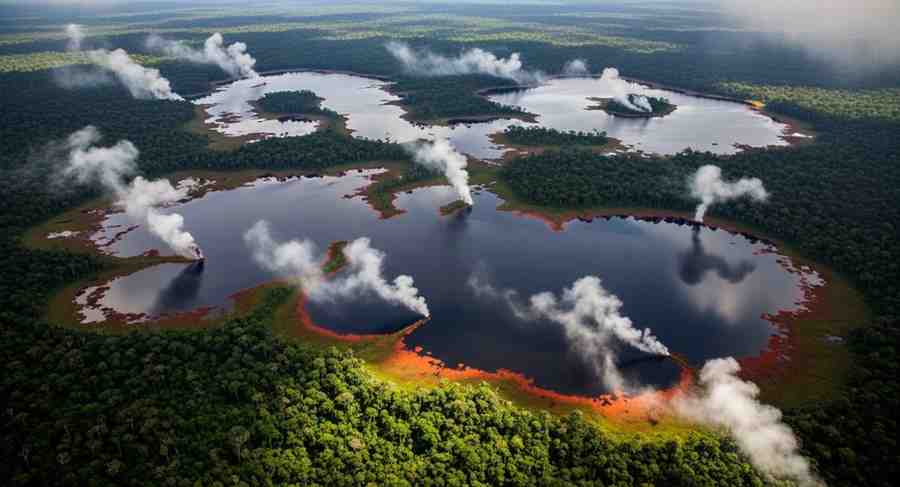
Two major lakes in the Democratic Republic of the Congo are releasing carbon that had remained stored for millennia in surrounding tropical peatlands, according to research published in Nature Geoscience . The study, conducted by scientists from ETH Zurich, examined emissions from Lake Mai-Ndombe and Lake Tumba in the Congo Basin and identified an unexpected contribution of ancient carbon to present-day atmospheric carbon dioxide levels.
Evidence of Millennia-Old Carbon Release
Radiocarbon analysis revealed that nearly 40% of the carbon dioxide emitted from these lakes originates from peat deposits more than 3,000 years old. These findings challenge earlier assumptions that tropical peatlands function as stable, long-term carbon sinks.
Researchers noted that the pathway through which stored carbon moves from peat soils into adjacent lakes is not yet fully understood. However, the results indicate that the carbon reservoir is less secure than previously believed.
Importance of Congo Basin Peatlands
Peatlands form when plant material accumulates in oxygen-poor, waterlogged environments, slowing decomposition and trapping carbon. The Congo Basin peatlands occupy just 0.3% of global land area but store roughly one-third of the carbon contained in tropical peat ecosystems worldwide. This makes the region one of Earth’s most significant natural carbon reserves.
Climate and Land-Use Implications
Climate variability and deforestation could intensify peat drying, triggering microbial decomposition and accelerating carbon release. Conversion of forest areas to agriculture may further destabilise these fragile systems.
Important Facts for Exams
-
Peatlands act as long-term carbon sinks under waterlogged conditions.
-
The Congo Basin is the second-largest rainforest after the Amazon.
-
Radiocarbon dating helps determine the age of carbon emissions.
-
Carbon dioxide is a principal greenhouse gas driving global warming.
The findings highlight the need for sustained ecological monitoring of the Congo Basin, as destabilisation of ancient carbon stores could amplify global climate change.
Month: Current Affairs - Mar 01, 2026
Category: Environment | Climate Change