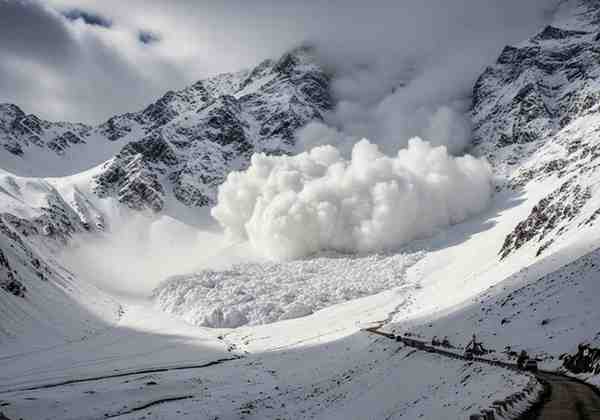
Avalanche at Zojila Pass Highlights Himalayan Vulnerability
A major snow avalanche has impacted Zojila Pass, disrupting movement along a critical Himalayan route. The incident underscores the fragility of high-altitude transport corridors and the challenges posed by extreme weather in maintaining connectivity between Kashmir and Ladakh.
Location and Geographical Importance
Zojila Pass is situated in the Kargil district of Ladakh along National Highway-1, connecting Srinagar, Kargil and Leh. Located at an altitude of about 11,650 feet in the Greater Himalayan Range, it acts as a vital gateway between the Kashmir Valley and Ladakh. Heavy snowfall forces its closure for several months annually, affecting both civilian travel and supply chains.
Strategic and Historical Significance
The pass holds immense military importance due to its role in ensuring access to border regions. During the Indo-Pakistan War of 1947–48, Zojila became a key battleground. Indian forces successfully recaptured it under Operation Bison, marking a landmark achievement in high-altitude warfare.
Understanding Avalanches
An avalanche is a sudden and rapid descent of snow down a slope, often triggered by instability within snow layers. Such events are common in steep, vegetation-sparse mountain terrains. Factors like fresh snowfall, weak snowpack and external disturbances increase the likelihood of avalanches, making regions like Zojila particularly prone.
Exam-Focused Points
-
Zojila Pass: Located in Ladakh on NH-1
-
Altitude: ~11,650 feet (Greater Himalayas)
-
Connects: Srinagar–Kargil–Leh route
-
Operation Bison (1948): Recapture by Indian Army
-
Avalanches: Caused by unstable snow layers
Impact on Connectivity and Preparedness
Frequent avalanches disrupt essential transport and defence logistics across this route. Ensuring safer movement requires advanced forecasting systems, avalanche control measures and resilient infrastructure. Strengthening preparedness is crucial to maintain year-round connectivity in this strategically vital region.
Month: Current Affairs - March 29, 2026
Category: Disaster Management, Internal Security