OVERVIEW
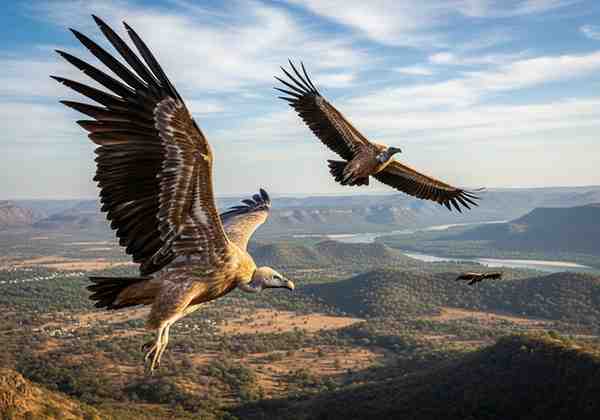
Two Indian vultures made a long journey. They were released in Melghat Tiger Reserve, Maharashtra. Later, people spotted them near Bhopal, Madhya Pradesh. They flew more than 1,000 km. This is good news for a bird that is critically endangered. The Indian vulture once faced near extinction because of a common painkiller given to cattle.
LATEST NEWS: A LONG FLIGHT
Two Indian vultures recently surprised wildlife experts. These birds were released in the Melghat Tiger Reserve (MTR) in Maharashtra’s Amravati district. Later, they were seen near Bhopal in Madhya Pradesh. How far did they travel? Over 1,000 km! This shows how strong and far these birds can fly. Their large wings help them cover long distances without using too much energy.
WHAT IS AN INDIAN VULTURE?
The Indian vulture is also called the long-billed vulture. It is a bird of prey native to Asia. Its scientific name is Gyps indicus . This bird belongs to a group called “Old World vultures.” These vultures are different from vultures found in the Americas. The Indian vulture is part of the Accipitridae family. This is the same family that includes eagles and hawks.
WHERE DO THEY LIVE?
Indian vultures are native to three countries:
What kind of places do they like? They prefer savannas and open habitats. You can find them near villages, cities, and cultivated areas. They do not live deep inside dense forests. They stay close to human settlements because that is where dead animals are found.
WHY DID THEIR NUMBERS DROP SO FAST?
This is a sad story. The Indian vulture lost 97–99% of its population. Why? Because of a drug called diclofenac. Farmers gave this drug to their working cattle. It reduced joint pain in the animals. This kept the cattle working longer. But when those cattle died, vultures ate their meat. The diclofenac in the meat caused kidney failure in the vultures. Within days, the birds died. This mistake almost wiped out an entire species.
PHYSICAL FEATURES
The Indian vulture is a bulky, medium-sized bird. Here are some easy-to-remember features:
-
Size: Females are smaller than males.
-
Head: Small and mostly bald, with very few feathers.
-
Neck: Long and featherless.
-
Eyes: Dark in colour.
-
Beak: Long and yellowish.
-
Body feathers: Light brown.
-
Wings: Broad and strong.
-
Tail feathers: Short.
-
Wingspan: Very large – helps them fly long distances with little energy.
Month: Current Affairs - May 12, 2026
Category: IndianVulture