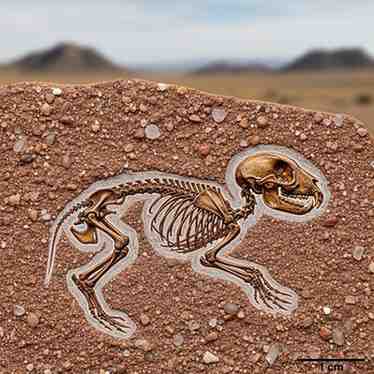
1 cm Micro-Mammal Fossil Sheds Light on Early Mammalian Life
A significant palaeontological discovery in the Gobi Desert has revealed an exceptionally preserved fossil measuring just one centimetre. Unearthed in the Ukhaa Tolgod region, the specimen is considered one of the earliest known micro-mammals from the Late Cretaceous period, offering valuable insights into early mammalian evolution.
Significance of the Discovery
The fossil, identified through collaboration with the American Museum of Natural History, features a complete and articulated skeleton—an extremely rare find for such a small organism. It resembles a shrew-like insectivore and represents an advanced Mesozoic stem-mammal that lived alongside dinosaurs such as Velociraptor.
Preservation Through Unique Geological Processes
The remarkable preservation is attributed to protracted aridification. Between 75 and 100 million years ago, increasing dryness in the Gobi Basin led to rapid burial by fine sandstorms. This protected delicate structures from decay, effectively preserving the fossil as a natural time capsule.
Insights into Ancient Climate and Adaptation
The discovery highlights how early mammals adapted to harsh, arid environments. As climatic conditions became drier, insectivorous mammals evolved survival strategies suited to limited water availability. The fossil also provides clues about past global warming phases and species responses to environmental stress.
Modern Techniques in Fossil Analysis
Given its tiny size, researchers are using micro CT scanning to study the fossil. This technique creates a high-resolution 3D digital model, allowing detailed examination of internal structures like teeth and the inner ear without damaging the specimen.
Exam-Focused Points
-
Location: Gobi Desert (Ukhaa Tolgod region) .
-
Period: Late Cretaceous (100–66 million years ago) .
-
Fossil size: ~1 cm (micro-mammal) .
-
Preservation: Protracted aridification + rapid burial .
-
Technique: Micro-CT scanning (3D analysis) .
-
Coexisted with dinosaurs like Velociraptor .
Month: Current Affairs - March 23, 2026
Category: Science - Technology, Environment