-
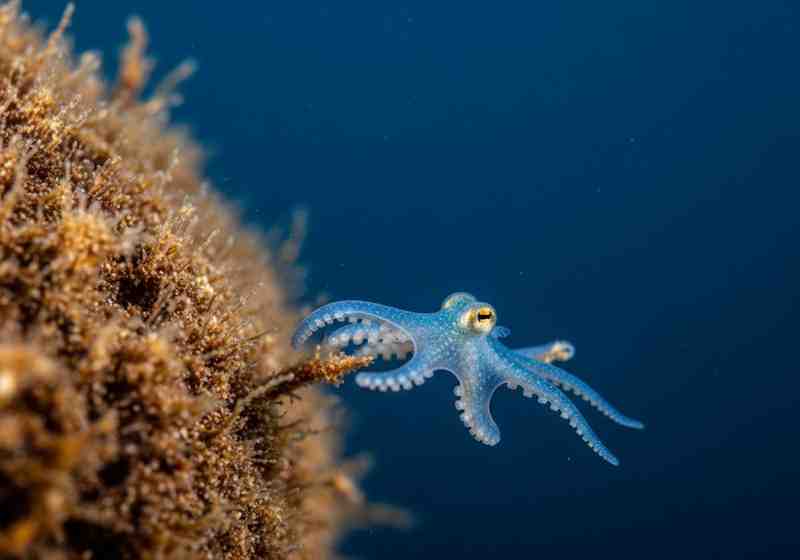
Species name : Microeledone galapagensis – a tiny blue octopus.
-
Discovered by : Charles Darwin Foundation scientists.
-
First found : During a deep-sea expedition in 2015.
-
Location : Galápagos Marine Reserve, near Galapagos Islands (Ecuador).
-
Size : Roughly the size of a golf ball.
-
Colour : Unusual blue coloration.
-
Habitat : Deep sea.
-
Key features : Smooth skin, large rachidian teeth, large funnel organ, few arm suckers, no ink sac, nearly pigment-free dorsally.
-
Galapagos Islands : In Pacific Ocean, 600 miles off Ecuador; UNESCO World Heritage site (1978).
-
Famous Galapagos animals : Giant tortoise, marine iguana, flightless cormorant, Galapagos penguin.
-
Highest point : Mount Azul (5,541 feet).
-
Youngest islands : Isabela and Fernandina. Oldest: Española and San Cristóbal (3–5 million years).
FAQ (Frequently Asked Questions)
Q1: In which region was Microeledone galapagensis discovered?
A: It was discovered in the Galápagos Marine Reserve, near the Galapagos Islands, which belong to Ecuador.
Q2: What are the key features of Microeledone galapagensis ?
A: It is small (golf-ball-sized), has smooth skin, few arm suckers, a large funnel organ, no ink sac, and is nearly pigment-free on its back.
Q3: When was this octopus first found?
A: It was first found during a deep-sea expedition in 2015, but the discovery was recently announced.
Q4: Why is the blue colour unusual for an octopus?
A: Most octopuses are brown, red, or grey to blend in with rocks and reefs. Bright blue is rare and may have a special function in the deep sea.
Q5: What is special about the Galapagos Islands?
A: The Galapagos Islands are a UNESCO World Heritage site known for unique animals like giant tortoises, marine iguanas, and flightless cormorants. They are formed by volcanic activity and have a unique climate.
Month: Current Affairs - May 27, 2026
Category: Biodiversity, Environment