are recognised as having outstanding natural value.
Amazing Biodiversity of the Galapagos
The Galapagos Islands are home to many animals that are found nowhere else on Earth. Some of the most famous include:
-
Giant Galápagos tortoise ( Chelonoidis nigra ) – These huge tortoises can live for over 100 years.
-
Marine iguana ( Amblyrhynchus cristatus ) – This is the only lizard in the world that swims in the sea.
-
Flightless cormorant ( Phalacrocorax harrisi ) – This bird lost its ability to fly because it had no land predators.
-
Galápagos penguin ( Spheniscus mendiculus ) – This is the only penguin species found north of the Equator.
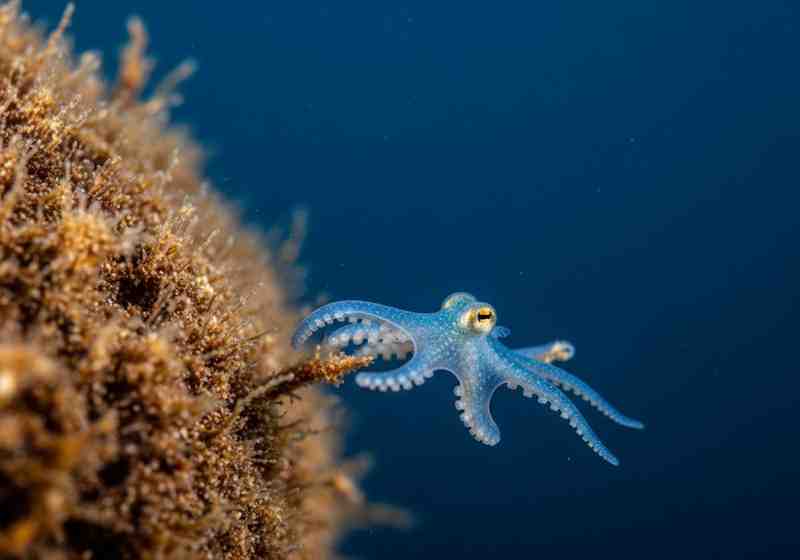
Now, we can add a tiny blue octopus to this list of wonderful creatures.
Why This Discovery Matters
Discovering a new species is always exciting. But this discovery has special meaning. First, it shows that the deep sea around the Galapagos still holds secrets. Second, the octopus is very different from other known octopuses. Its lack of an ink sac and its blue colour are unusual. Scientists will study it further to understand how it survives without ink and why it is blue. Third, this discovery reminds us to protect the ocean. The Galápagos Marine Reserve is a protected area, but the deep sea faces threats from climate change, plastic pollution, and deep-sea mining. Knowing what lives there helps us argue for better protection.
Key Features of Microeledone galapagensis
Let us list the main features of this new species:
-
Small size – About the size of a golf ball.
-
Blue colouration – Unusual among octopuses.
-
Smooth skin – Not bumpy or rough.
-
Few arm suckers – Less than most octopuses.
-
Large rachidian teeth – Part of its feeding apparatus.
-
Large funnel organ – Helps with movement.
-
No ink sac – Cannot squirt ink.
-
Nearly pigment-free back – Almost colourless on top.
A Humble Reminder
The discovery of Microeledone galapagensis is a beautiful reminder that our planet is full of wonders. Even in places that scientists have visited many times, new species are waiting to be found. The Charles Darwin Foundation and other research organisations continue to explore the Galapagos. Their work helps us understand life on Earth better. For the rest of us, this tiny blue octopus is a reason to feel awe and respect for nature. It may be small, but it is a giant discovery.
Exam-Focused Points
Month: Current Affairs - May 27, 2026
Category: Biodiversity, Environment