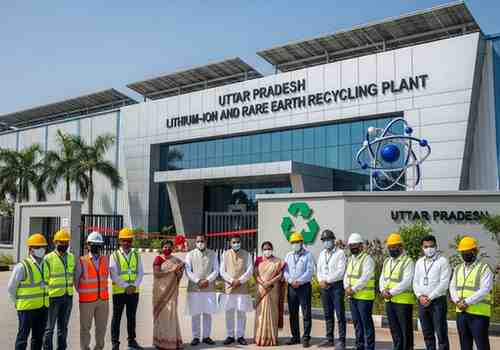
Overview
The first integrated recycling plant in Sikandrabad, Uttar Pradesh has seen India make a significant move towards ensuring critical mineral supply chains. The plant, designed by Rocklink India in the UPSIDC industrial area, helps the country in the clean energy transition by allowing domestic recovery of high-value materials used in the electric vehicles and renewable technologies.
Recycling of the Critical Materials.
Under a single system the facility handles lithium-ion batteries, rare earth magnets and metal-bearing industrial waste. This combined method will result in the development of a circular economy through the recovery of useful materials like lithium, cobalt and nickel that are otherwise imported. It is the direct supporter of industries such as EV production, solar power, and hi-tech electronics.
Capacity and Rare Earth Processing.
The recycling capacity of the plant is 10,000 tonnes of lithium-ion batteries per year. It is also processing 60 tonnes of rare earth magnets monthly. More downstream processing will be enhanced by a dedicated rare-earth chloride unit with 1,500 tonnes/year capacity, which is projected to be in operation by 2026.
Enhanced Technology and EPR Conformance.
The facility is run under the Extended Producer Responsibility (EPR) norms whereby the producers are not absolved of waste management. It has more than 98% recycling efficiency of metals, such as aluminium, copper and iron, through an advanced in-house recycling process and maintains high environmental standards with regard to hazardous emissions.
Increase to Circular Economy and Self-Reliance.
The project also involves battery refurbishment systems, which check and reuse functional cells, which will lengthen battery life and decrease waste production. It also allows the recycling of rare earth magnets including NdFeB, SmCo, and AlNiCo, enhancing the traceability and minimizing imports dependency. It is in line with the overall approach of India in attaining resource security and sustainable industrial development.
Exam-Focused Points
- In India, the first recycling plant to combine lithium-ion and rare earth.
- In Sikandrabad, Uttar Pradesh.
- S.A.F.H. 10,000 tonnes/year lithium-ion recycling.
- Works according to the Extended Producer Responsibility (EPR) standards.
- R2 process R2 process: More than 98% metal recovery.
- Favors EV, renewable energy and electronics industries.
MCQ
Q. What does Extended Producer Responsibility (EPR) aim to achieve?
A. To augment the production in the industry.
B. To hold producers accountable to handle the waste of the products.
C. To control international trade of minerals.
D. To provide subsidies on renewable energy.
Answer: B
Explanation: EPR provides an accountability to the producer to maintain the lifecycle of products such as safe disposal and recycling of waste products.
Month: Current Affairs - April 25, 2026
Category: Environment, Energy