Amrabad Tiger Reserve: Conservation and Tribal Rehabilitation Explained
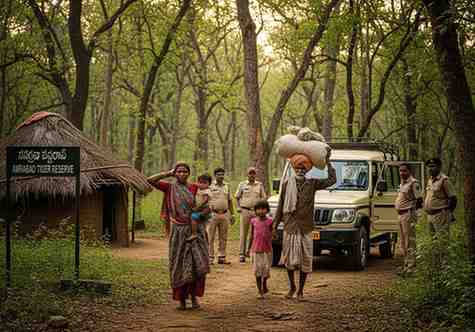
The Telangana government has initiated relocation of tribal families from the Amrabad Tiger Reserve to balance wildlife conservation with socio-economic development. The move aims to reduce human-wildlife conflict while improving living conditions for indigenous communities.
Location and Historical Background
Amrabad Tiger Reserve is situated in the Nallamala hills of the Eastern Ghats. It was carved out of the Nagarjunasagar Srisailam Tiger Reserve after the bifurcation of Andhra Pradesh in 2014. The reserve is among the largest protected tiger habitats in southern India.
Terrain and River Systems
The reserve features rugged landscapes, deep valleys and dense forest cover. The Krishna River flows through the region, supported by several perennial streams. These water systems contribute to major reservoirs such as Srisailam and Nagarjunasagar, enhancing the ecological importance of the area.
Tribal Communities and Biodiversity
The forest is home to the Chenchu tribe, a Particularly Vulnerable Tribal Group dependent on forest resources. The reserve hosts dry deciduous forests with species like teak, bamboo and medicinal plants. Wildlife includes tigers, leopards, sambar, chital, nilgai and gaur, along with over 300 bird species.
Significance of Relocation Initiative
The relocation programme seeks to reduce pressure on core forest areas, aiding conservation of wildlife, especially tigers. At the same time, it aims to provide tribal communities with improved access to housing, healthcare, education and livelihood opportunities, ensuring a balanced approach to conservation and development.
Exam-Focused Points
-
Location: Amrabad Tiger Reserve (Telangana, Eastern Ghats)
-
Origin: Part of Nagarjunasagar-Srisailam TR (pre-2014)
-
Tribe: Chenchu (PVTG)
-
River: Krishna River flows through reserve
-
Biodiversity: Tigers, leopards, rich avifauna
-
Aim: Reduce conflict + improve tribal welfare
Month: Current Affairs - March 27, 2026
Category: