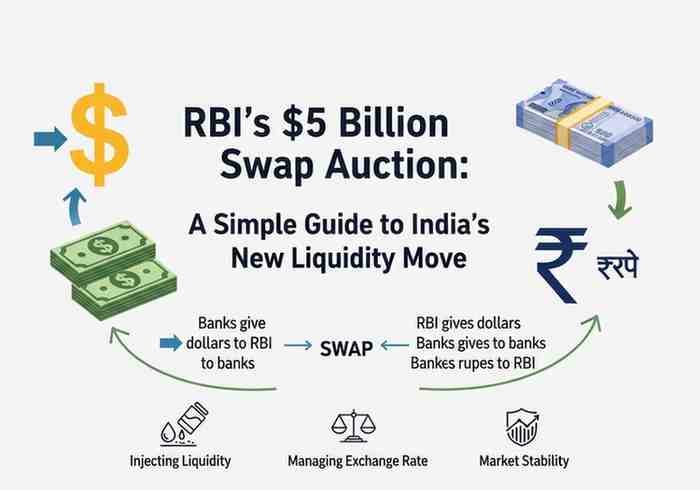
Overview
The Reserve Bank of India (RBI) has announced a $5 billion USD-INR buy/sell swap auction on May 26. This move aims to inject long-term liquidity into the banking system. The decision comes at a time when the rupee is weak and global markets are uncertain. The three-year swap operation will help banks get more rupees while supporting financial stability.
Latest News: RBI Announces Major Liquidity Support
The Reserve Bank of India (RBI) has announced a big step to support the banking system. On May 26, the RBI will conduct a $5 billion USD-INR buy/sell swap auction. This is a three-year swap operation. The goal is to inject fresh long-term liquidity into the banking system. The move comes when the rupee is facing pressure from global uncertainty and external market volatility. The central bank wants to improve liquidity conditions for banks and help manage financial stability.
What Is the $5 Billion USD-INR Swap Auction?
The RBI will conduct a foreign exchange swap auction worth USD 5 billion. The tenor (time period) is three years. This is a USD-INR buy/sell swap. In simple words, the RBI will buy dollars from participating banks right now. Later, after the swap period ends, the RBI will sell the same amount of dollars back to those banks. This operation is designed to inject rupee liquidity into the financial system for a longer duration. It is an important central bank tool. It helps manage liquidity without directly changing benchmark interest rates.
How Does the Dollar Swap Actually Work?
The mechanism sounds technical, but the concept is straightforward. Here is how it works step by step:
-
A participating bank sells US dollars to the RBI immediately.
-
The bank receives rupees in exchange for those dollars.
-
The bank also commits to buying back the same dollars after three years.
In simple terms, banks temporarily hand over dollars and receive rupee funds. They can then use these rupees in the financial system. The RBI gets foreign currency reserves support. Banks gain liquidity. Everyone benefits.
Bid Conditions Set by RBI
The RBI has set clear rules for bidders who want to participate:
-
Minimum bid size: USD 10 million
-
Additional bids: In multiples of USD 1 million
-
Premium quotes: In paisa up to two decimal places
The final auction cut-off will depend on the premium bids received. This means banks must quote the premium they are willing to accept.
Why Is RBI Taking This Step Now?
The timing of this auction is very important. There are three main reasons.
Reason 1: Rupee Under Pressure
The Indian rupee has weakened against the US dollar. This has happened due to ongoing global uncertainty in the last few days. Several factors are contributing
Month: Current Affairs - May 21, 2026
Category: RBI Monetary Policy