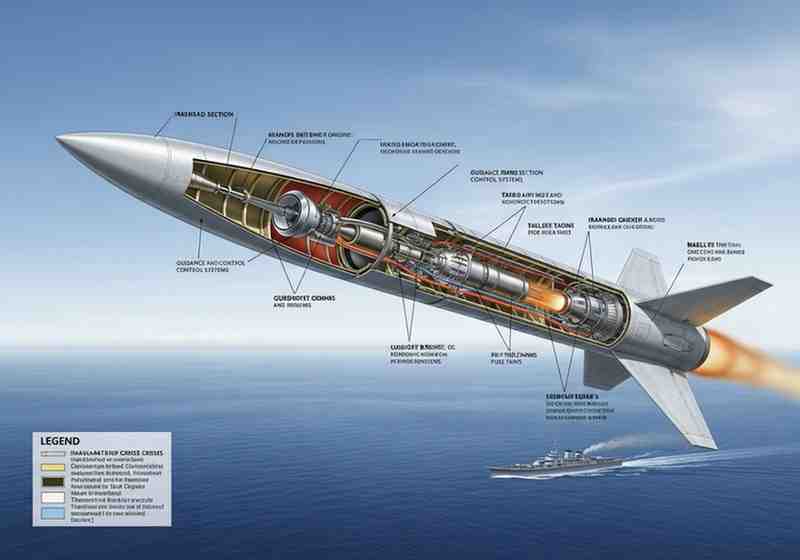
Cruise Missile Technology in Focus: Iran’s Qader and Modern Naval Warfare
Iran has recently attracted global attention following reports of Qader cruise missile activity near the USS Abraham Lincoln. The episode highlights the rising role of advanced anti-ship missiles in contemporary naval strategy.
About Qader Cruise Missile
The Qader is a medium-range, shore-based anti-ship cruise missile developed by Iran for maritime defence. It is an upgraded version of the Noor missile, which traces its origins to Chinese missile technology. The system is designed to target large naval assets, including warships and commercial vessels.
Key Features and Capabilities
The missile has an estimated range between 120 and 300 kilometres. It carries a high-explosive warhead of around 200 kilograms, enabling it to inflict substantial damage on heavily protected targets. Its deployment strengthens coastal defence and extends Iran’s operational reach in nearby waters.
Working Mechanism and Flight Profile
Powered by a turbojet engine, the Qader follows a low-altitude “sea-skimming” trajectory. By flying just above the sea surface, it reduces radar detection and shortens response time for defensive systems. This flight profile significantly increases the probability of successful target engagement.
Understanding Cruise Missiles
Cruise missiles are precision-guided weapons that travel at low altitudes and can adjust their path during flight. Unlike ballistic missiles, they rely on jet propulsion and advanced navigation systems such as GPS and inertial guidance. Their speed typically ranges from subsonic to supersonic levels. Well-known examples include BrahMos, Nirbhay and Tomahawk.
Exam-Focused Points
-
Qader: Iranian anti-ship cruise missile
-
Origin: Upgraded version of Noor (Chinese-derived)
-
Range: 120–300 km
-
Warhead: ~200 kg high explosive
-
Feature: Sea-skimming for radar evasion
-
Type: Jet-powered, guided cruise missile
Month: Current Affairs - March 28, 2026
Category: Defence Technology, Security