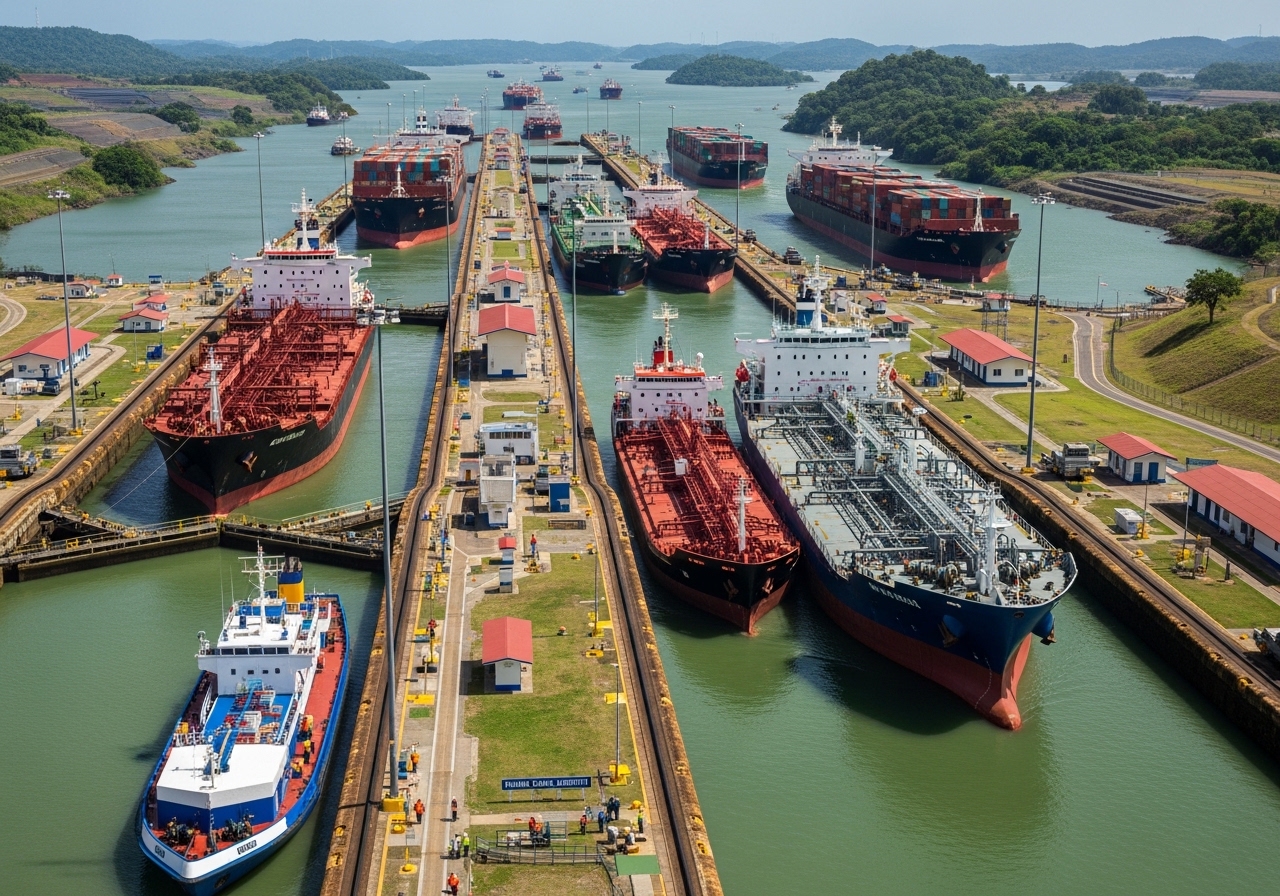
LNG Trade Surge Elevates Panama Canal’s Strategic Importance
The Panama Canal is currently operating at full capacity, handling 36–38 vessels daily. Rising geopolitical tensions in West Asia have increased its importance as a key alternative global shipping route.
Rising Demand Due to Geopolitical Disruptions
Disruptions in major routes such as the Strait of Hormuz and Suez Canal have forced shipping companies to reroute vessels. As a result, traffic through the Panama Canal has surged, particularly for energy shipments moving between the Atlantic and Pacific regions.
Increased LNG Transit Through the Canal
The canal authority has introduced a dedicated daily transit slot for Liquefied Natural Gas (LNG) carriers, a significant rise from earlier levels. This reflects growing demand for energy transport, especially from the United States to international markets, amid ongoing supply uncertainties.
Operational Capacity and Water Availability
Improved water levels following earlier drought conditions have enabled the canal to operate at maximum efficiency. Daily vessel traffic now exceeds earlier projections, and scheduled maintenance activities are not expected to disrupt operations, ensuring smooth transit flows.
Global Trade Implications
The increased reliance on the Panama Canal highlights changing global trade routes in response to geopolitical instability. Reduced container traffic from Asia has allowed more capacity for energy shipments, particularly LNG. This shift underscores the canal’s critical role in sustaining global energy supply chains during crises.
Exam-Focused Points
-
Panama Canal connects Atlantic & Pacific Oceans
-
Current capacity: 36–38 vessels/day
-
Key disruption routes: Strait of Hormuz, Suez Canal
-
LNG: Liquefied Natural Gas transported via tankers
-
Trend: Rerouting of global energy trade via Panama
Month: Current Affairs - March 25, 2026
Category: Economy, Energy Security