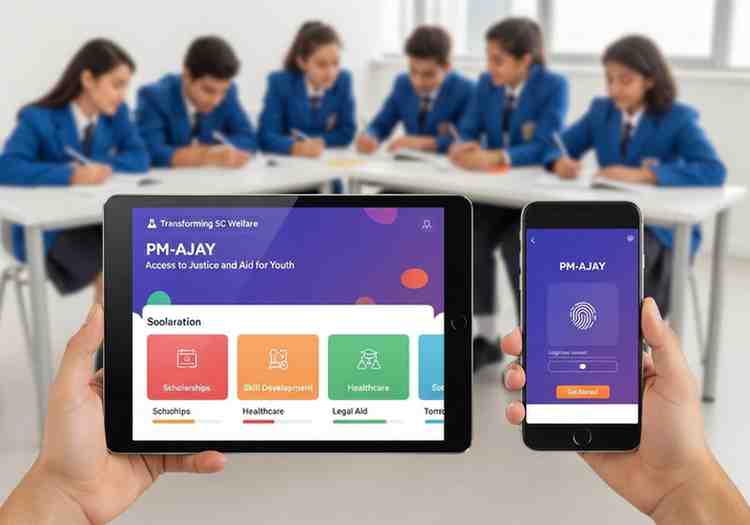
Overview
On May 26, 2026, the Ministry of Social Justice and Empowerment launched the PM‑AJAY portal and the AJAY mobile app to fully digitise the Pradhan Mantri Anusuchit Jaati Abhyuday Yojana (PM‑AJAY). The scheme, started in 2021‑22, consolidates three earlier programmes to uplift Scheduled Caste communities through model villages, livelihood projects and hostels.
Digital Leap for an Important Welfare Scheme
On 26 May 2026, the Ministry of Social Justice and Empowerment (MoSJE) unveiled the PM‑AJAY portal and the AJAY mobile application . The event was led by Union Minister Dr. Virendra Kumar , along with MoS B.L. Verma and Secretary Sudhansh Pant ; officials from all states and Union territories joined virtually.
These digital tools are designed to make the Pradhan Mantri Anusuchit Jaati Abhyuday Yojana (PM‑AJAY) completely paperless – from planning and fund release to on‑ground monitoring. The initiative will cover more than 47,000 villages with a high concentration of Scheduled Caste (SC) population and over 4 million beneficiaries across the country.
What is the PM‑AJAY Scheme?
PM‑AJAY is a 100% centrally funded umbrella scheme launched in 2021‑22 . It merges three former centrally sponsored schemes:
-
Pradhan Mantri Adarsh Gram Yojana (PMAGY)
-
Special Central Assistance to Scheduled Castes Sub Plan (SCA to SCSP)
-
Babu Jagjivan Ram Chhatrawas Yojana (BJRCY)
The main goals are:
-
Reducing poverty among SC communities through skill development and income‑generation projects.
-
Improving infrastructure and essential services in SC‑majority villages.
-
Increasing literacy and school enrolment by providing hostel facilities in quality institutions.
Three Main Components of PM‑AJAY
1. Adarsh Gram (Model Village)
Villages with ≥50% SC population can be selected as “Adarsh Grams.” Gap‑filling development is tracked through 50 socio‑economic indicators across 10 domains (e.g., drinking water, education, health, roads, electricity). Up to 50% of the annual funds are allocated to this component.
2. Grants‑in‑Aid for Socio‑Economic Projects
This component provides financial support for:
-
Infrastructure creation in SC‑dominated villages.
-
Comprehensive livelihood projects that include skill training, income‑generating activities, and related infrastructure.
-
Assistance towards loans taken by beneficiaries for acquiring assets needed for livelihood generation (maximum ₹50,000 or 50% of asset cost , whichever is less).
3. Hostel Construction
Hostels are built in:
Month: Current Affairs - May 26, 2026
Category: Social Justice, Welfare