Overview
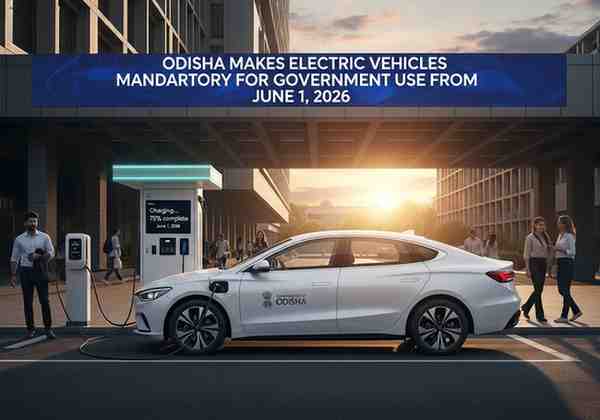
Odisha has taken a strong step towards clean energy. From 1 June 2026, the state government will only buy electric vehicles (EVs) for official use. This rule applies to both new two-wheelers and four-wheelers. It also covers four-wheelers hired for government work. The order was issued on 21 May 2026 by Chief Minister Mohan Charan Majhi. It is part of an eight-point plan to reduce pollution and fuel costs.
Latest News: Odisha’s EV Mandate
On 21 May 2026, the Odisha government issued a landmark order. Chief Minister Mohan Charan Majhi announced that from 1 June 2026, all new two-wheelers and four-wheelers purchased for state government use must be electric. The rule also applies to hired four-wheelers used for official work. Petrol and diesel vehicles can only be bought in special circumstances or when there is a specific requirement that an EV cannot meet. This decision makes Odisha one of the leading states in promoting electric mobility.
Why Is Odisha Doing This?
The state has several reasons for this move. First, electric vehicles do not emit harmful gases. They help reduce air pollution. Second, EVs are cheaper to run than petrol or diesel vehicles. Electricity costs less than fuel. Third, India has set a goal to reduce carbon emissions. States like Odisha are doing their part. Fourth, the government wants to set an example. If the government uses EVs, private citizens may also feel encouraged to switch. This is called leading by example.
What Is Covered Under the Order?
The order covers two main categories:
-
New two-wheelers purchased for government use
-
New four-wheelers purchased for government use
It also applies to four-wheelers hired for official government work from 1 June 2026. If a government department needs to rent a car for an officer’s travel, that car must also be electric. The only exception is when an electric vehicle cannot meet the specific need. For example, if a vehicle needs to travel very long distances without charging facilities, a petrol or diesel vehicle may be allowed. But such cases will be rare.
Carpooling and Fuel Cuts
The Odisha government has also introduced new rules for fuel use. Senior officers who have official vehicles must now carpool. This means two or more officers will share one vehicle instead of using separate cars. This reduces the number of vehicles on the road. It also saves fuel.
Along with carpooling, the fuel allocation for such vehicles will be reduced by half. So if an officer’s vehicle used to get 100 litres of fuel per month, it will now get only 50 litres. This forces officers to plan their travel better and use fuel efficiently.
Reducing Monthly Fuel Consumption
All government departments in Odisha have been given a clear target. They must ensure at least a 10% reduction in monthly fuel consumption for government vehicles. This is not a suggestion. It is a directive. Departments will have to track their fuel use and report their savings. This will help the state reduce its fuel import bill and cut down on greenhouse gas emissions.
Guidelines Coming Soon
Month: Current Affairs - May 22, 2026
Category: Environment, Energy, Economy