OECD Explained: India Growth Forecast and Global Economic Role
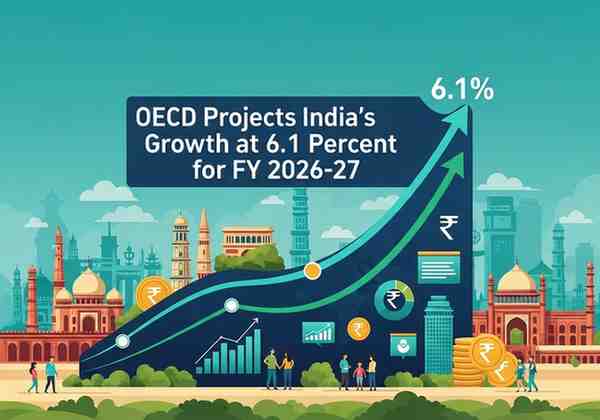
The Organisation for Economic Co-operation and Development has projected India’s GDP growth at 6.1% for FY 2026–27, reflecting sustained confidence in the country’s economic performance despite global uncertainties.
About OECD and Its Formation
The OECD was established on 14 December 1960 by a group of European nations along with the United States and Canada. Headquartered in Paris, it was created to foster economic cooperation and development among advanced economies and has since evolved into a global policy platform.
Membership and Core Objectives
The organisation currently includes 38 member countries, primarily democratic economies with market-based systems. Its core objective is to promote policies that enhance economic growth, improve living standards, and ensure social well-being. It emphasises inclusive growth, employment generation, and sustainable development.
Functions and Global Role
The OECD produces influential economic outlooks, data reports, and policy analyses that guide governments worldwide. It works on improving governance standards, combating corruption, and ensuring transparency in global taxation systems. The organisation also plays a role in identifying non-cooperative tax jurisdictions and promoting financial accountability.
India’s Association with OECD
Although India is not a member, it has been a Key Partner of the OECD since 2007. This engagement allows India to participate in policy dialogues, economic studies, and collaborative initiatives. The organisation’s growth projection underscores India’s significance as a major emerging economy in the global system.
Exam-Focused Points
-
OECD established: 1960
-
Headquarters: Paris, France
-
Members: 38 countries
-
India status: Key Partner since 2007
-
Role: Economic policy analysis and global forecasts
-
India growth forecast: 6.1% (FY 2026–27)
Month: Current Affairs - March 28, 2026
Category: Economy, International Organisations