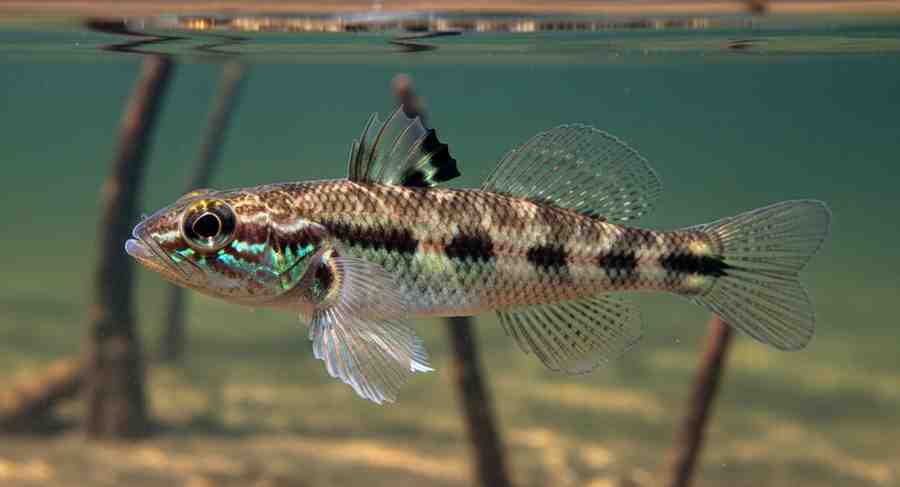
Rupnarayan River Yields New Fish Species Highlighting Estuarine Biodiversity
Researchers in West Bengal have identified a new estuarine fish species named Butis bargabhimae , adding to India’s aquatic biodiversity. The discovery was made in the Rupnarayan River near Tamluk, an area recognised for both ecological diversity and cultural heritage.
Discovery in the Estuarine Ecosystem
The Rupnarayan River forms part of a dynamic estuarine system where freshwater mixes with seawater. Such environments are biologically rich and support species adapted to fluctuating salinity levels.
The identification of Butis bargabhimae reinforces the importance of estuaries as reservoirs of lesser-known and specialised aquatic organisms.
Taxonomy and Family Characteristics
The species belongs to the Butidae family, commonly known as gudgeon gobies. Members of this group are typically found in brackish water habitats such as estuaries, creeks and mangrove ecosystems.
These fishes exhibit strong adaptability to changing salinity, which allows them to thrive in transitional aquatic environments.
Distinctive Morphological Features
Butis bargabhimae can be distinguished by several unique traits:
-
Presence of interorbital scales between the eyes
-
Additional auxiliary body scales
-
Light and dark banding on pectoral fins
These features set it apart from closely related species within the same genus.
Cultural and Naming Significance
The species name “bargabhimae” is derived from Bargabhima , reflecting the cultural identity of the region. This naming approach highlights the link between scientific discoveries and local traditions, acknowledging regional heritage alongside biological research.
Exam-Focused Points
-
Butis bargabhimae discovered in West Bengal.
-
Found in Rupnarayan River (estuarine habitat).
-
Belongs to Butidae (gudgeon gobies).
-
Key feature: interorbital scales and banded pectoral fins .
-
Named after Bargabhima .
Month: Current Affairs - March 18, 2026
Category: Environment & Biodiversity