ZSI Identifies DNA-Based New Species from Deccan Plateau
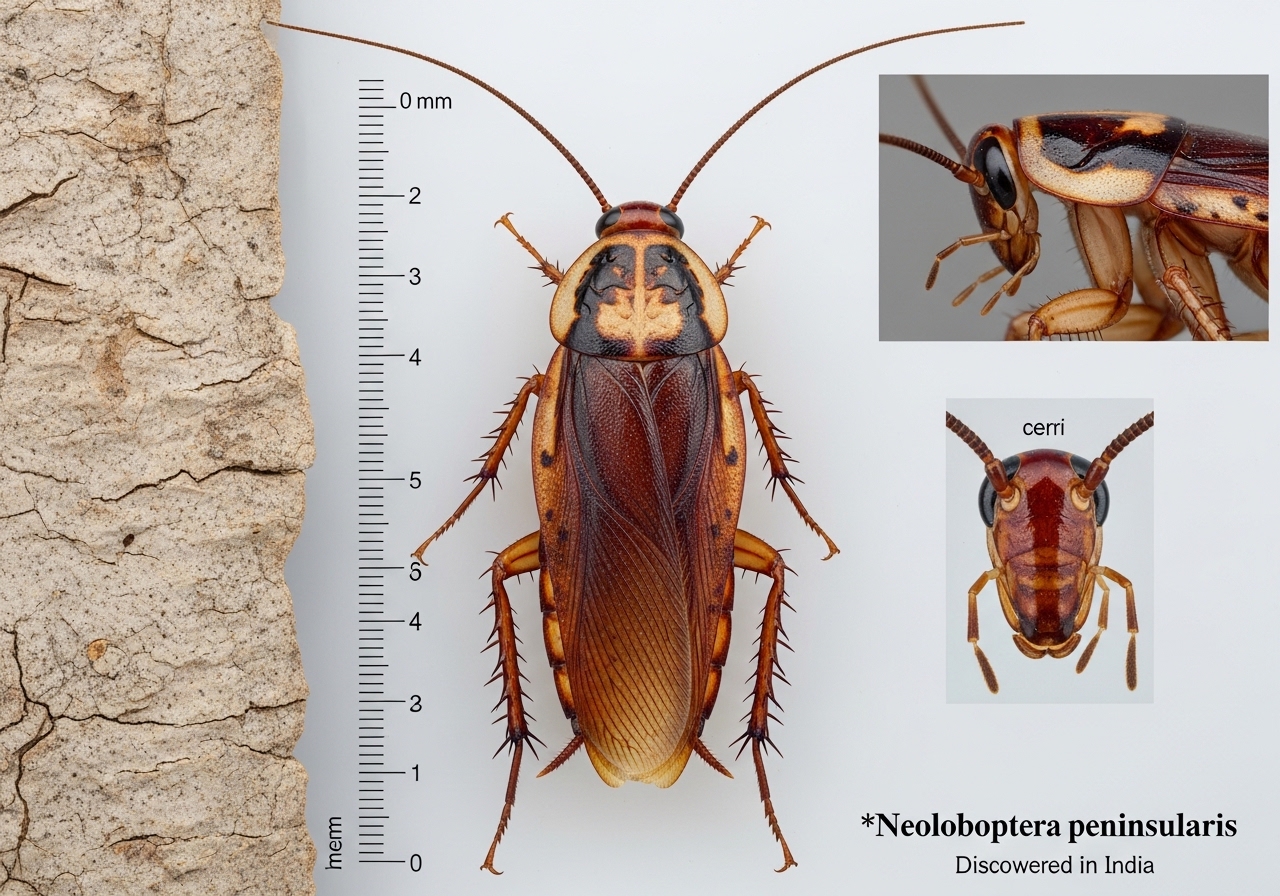
Scientists from the Zoological Survey of India have discovered a new cockroach species, Neoloboptera peninsularis , in Maharashtra’s Deccan region. The finding highlights India’s rich insect diversity and advances in modern taxonomic research.
Discovery and Habitat
The species was recorded in Nathachiwadi near Pune, situated within the Deccan Plateau. It inhabits palm vegetation and dry leaf litter in areas close to farmland, showing its ability to survive in both natural and human-influenced habitats. The name “peninsularis” signifies its origin in Peninsular India.
Scientific Significance of the Discovery
This identification is significant as it marks the first time DNA-based methods have been applied in India to classify a cockroach species. The discovery reinforces the role of molecular techniques in improving accuracy in taxonomy. It is also only the third known species of the genus Neoloboptera reported from India, with earlier records dating back to 1865 and 1995.
Key Morphological Features
The species displays a glossy yellowish-brown body with fully developed wings. It has unique structural characteristics such as uneven cerci (rear appendages) and a distinct whip-like male reproductive structure. These features are essential for differentiating it from closely related species.
Importance for Biodiversity Studies
The finding emphasises the need for continued exploration of lesser-known insect groups in India. It also showcases the importance of combining traditional morphology with modern genetic tools to uncover hidden biodiversity. Institutions like ZSI play a crucial role in documenting such species and expanding ecological knowledge.
Exam-Focused Points
-
Species: Neoloboptera peninsularis (new cockroach species)
-
Discovered by: Zoological Survey of India (ZSI)
-
Location: Pune, Deccan Plateau (Maharashtra)
-
Method: DNA-based taxonomy (first in India for cockroach)
-
Genus: Neoloboptera (3 species in India)
-
Habitat: Leaf litter and palm vegetation near agricultural areas
Month: Current Affairs - March 28, 2026
Category: Biodiversity, Science - Technology