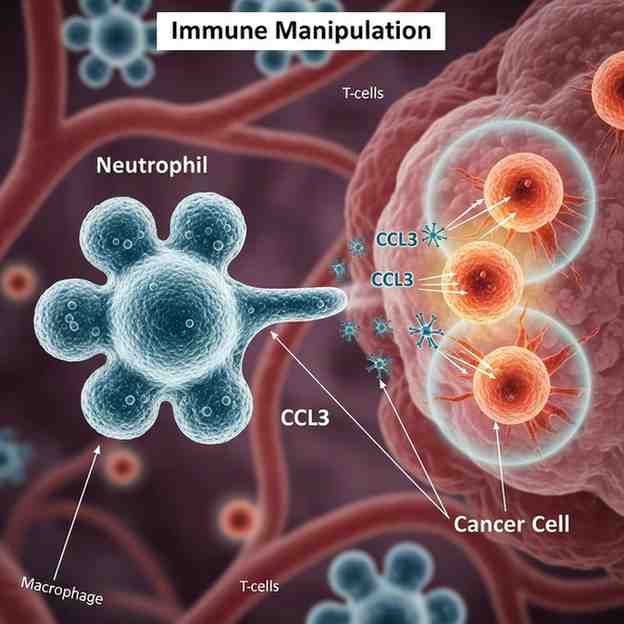
Tumours reshape the immune response
A new scientific study has shown that cancer cells can actively manipulate the body’s immune defences, turning protective mechanisms into drivers of tumour growth. The findings reveal how cancers exploit immune cells within the tumour microenvironment, offering fresh insights into disease progression and opening avenues for more precise cancer therapies.
Neutrophils switch roles inside tumours
The research, conducted by scientists from the University of Geneva in collaboration with the Ludwig Institute for Cancer Research, examined neutrophils—white blood cells that normally form the body’s frontline defence against infection.
Inside tumours, however, neutrophils were found to undergo functional “reprogramming”. Instead of attacking abnormal cells, they begin supporting tumour survival and expansion, highlighting how the tumour microenvironment can distort immune behaviour.
CCL3 identified as a tumour-promoting signal
The study identified the chemokine CCL3 as a central molecule produced by these reprogrammed neutrophils. Elevated CCL3 levels were linked to faster tumour growth and disease progression. According to lead investigator Mikaël Pittet , tracking such molecules helps explain why some cancers behave more aggressively than others.
Gene control reverses harmful immune programming
Researchers demonstrated that selectively switching off the CCL3 gene in neutrophils prevented them from adopting tumour-supporting behaviour. Crucially, this genetic control did not disrupt their normal immune functions. The neutrophils could still circulate in the bloodstream and enter tumour tissue but no longer promoted cancer growth, positioning CCL3 as a promising therapeutic target.
Important Facts for Exams
-
Neutrophils are the most abundant white blood cells in humans
-
Chemokines like CCL3 regulate immune signalling and cell migration
-
Tumour microenvironments can reprogramme immune cells
-
Biomarkers help track cancer progression and treatment response
-
Targeted immune modulation is a key area of modern cancer therapy
Implications for personalised cancer treatment
By analysing data from several independent studies, scientists suggest that cancer progression may depend on a limited number of biological drivers. Identifying and targeting such factors could allow clinicians to better predict tumour behaviour and tailor treatments to individual patients. The findings reinforce the growing importance of immunology-based, personalised approaches in future cancer management.
Month: Current Affairs - February 07, 2026
Category: Science - Technology