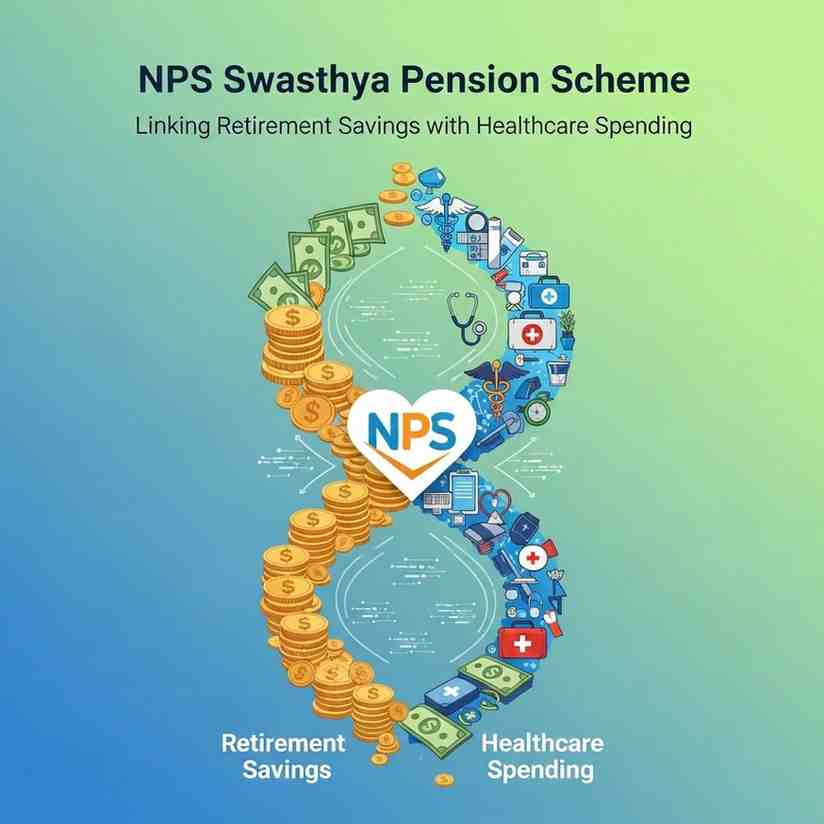
NSPS: A New Attempt to Blend Pension and Healthcare Planning
The Pension Fund Regulatory and Development Authority has launched the NPS Swasthya Pension Scheme (NSPS) on a pilot basis, introducing a novel idea—using a portion of retirement savings to meet healthcare expenses. While the scheme offers flexibility for routine medical costs, financial planners caution that it is suitable only for a narrow group of subscribers and should not be viewed as an alternative to health insurance.
Who the Scheme Is Best Suited For
From a personal finance standpoint, NSPS works primarily for existing National Pension System subscribers who are over 40 years of age and already hold a sizable NPS corpus. The scheme allows subscribers to transfer up to 30% of their NPS Common Account balance into a dedicated healthcare pool without making fresh contributions.
This feature may benefit individuals managing chronic conditions such as diabetes or hypertension, where annual outpatient expenses typically range between ₹15,000 and ₹30,000. Unlike health insurance, NSPS permits OPD withdrawals without waiting periods or exclusions for pre-existing illnesses.
Why NSPS Cannot Replace Health Insurance
Financial advisers stress that NSPS is not designed to substitute health insurance. For individuals who already have comprehensive medical cover of ₹5–10 lakh, diverting retirement savings into a low-return, self-funded healthcare pool can result in a significant opportunity cost.
Older subscribers, particularly those above 65 years, are advised to be cautious. The scheme requires a minimum healthcare corpus of ₹50,000 before withdrawals, which may delay access to funds when medical needs are most immediate.
Managing Medical Emergencies Under NSPS
The limitations of NSPS become more apparent during major hospitalisation events. High-cost procedures, often running into ₹6–8 lakh, are typically covered under health insurance through cashless treatment. NSPS, in contrast, follows a reimbursement model—subscribers must pay upfront and wait 7–15 days for claims to be processed. This can create liquidity pressure when hospitals demand immediate payment.
Important Facts for Exams
-
NSPS is a pilot scheme under the National Pension System
-
Up to 30% of the NPS Common Account balance can be shifted to NSPS
-
OPD withdrawals are allowed without waiting periods
-
The scheme does not provide cashless hospitalisation facilities
Key Risks and Structural Limitations
Experts point out several built-in constraints. Only 25% of contributions can be withdrawn at a time, not the entire corpus. A single major medical event can exhaust the healthcare pool, leaving future needs uncovered. Since returns remain market-linked, they may fail to keep pace with medical inflation. Once the catastrophic exit provision is used, subscribers lose further healthcare protection under the scheme.
The Bottom Line
NSPS may serve as a supplementary tool for select NPS subscribers with predictable outpatient medical expenses. However, it lacks the risk-pooling and cashless benefits that define health insurance. Financial experts are clear: NSPS can complement insurance planning in limited cases, but it should never be treated as a replacement for comprehensive health cover.
Month: Current Affairs - February 01, 2026
Category: Economy & Personal Finance