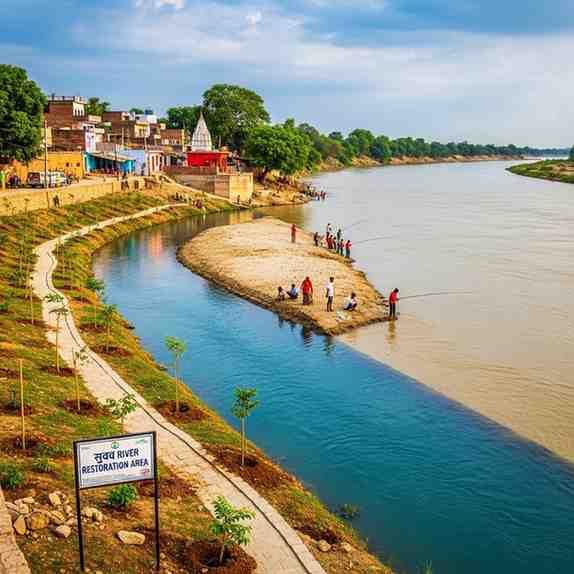
Suav Reclassified as River After NGT Intervention
The National Green Tribunal (NGT) has directed the Uttar Pradesh government to reinstate the Suav’s designation as a “river” instead of a “nullah” in official revenue records and gazette notifications. The ruling addresses concerns over environmental degradation and improper land use linked to the earlier downgrading of the Suav, an important tributary of the Rapti River in Balrampur district.
Tribunal’s Directive on Official Records
The bench, headed by NGT Chairman Justice Prakash Srivastava, instructed the Balrampur District Magistrate to amend relevant revenue entries within three months. The correction must also be published in the Official Gazette and local newspapers to ensure administrative transparency.
Authorities in Balrampur and Siddharthnagar districts were further directed to suspend new construction activities within the Flood Plain Zone until the Active Flood Zone is scientifically demarcated. The case was initiated under the tribunal’s suo motu jurisdiction following a letter petition referencing the Supreme Court judgment in Municipal Corporation of Greater Mumbai vs Ankita Sinha .
Ecological and Historical Relevance
Petitioners cited the 1906 Gonda: A Gazetteer , which recognised the Suav (historically Suwawan) as a significant tributary. Stretching nearly 120 km, the river plays a critical hydrological role by replenishing wetlands, ponds and lakes before merging with the Rapti, itself part of the Ganga basin.
Encroachments, land reclamation and infrastructure development had gradually altered its classification. The petition warned that projects such as a sewage treatment plant on the riverbed could intensify ecological stress and flood vulnerability.
Monitoring and Floodplain Protection
The tribunal directed District Ganga Committees to adopt community-led rejuvenation approaches inspired by the Sant Seechewal model. The Uttar Pradesh Pollution Control Board will monitor water quality, including treated effluents, while the Irrigation and Water Resources Department must demarcate active floodplains within six months in line with Central Water Commission norms.
Exam-Focused Key Points
-
NGT ordered Suav’s restoration as a river in records.
-
Suav is a tributary of the Rapti River (Ganga basin).
-
Section 26 of the NGT Act prescribes penalties for non-compliance.
-
Floodplain zoning guided by Central Water Commission guidelines.
-
Sant Seechewal model cited for community-driven rejuvenation.
Month: Current Affairs - February 24, 2026
Category: Environment & Ecology