Wet Bulb Temperature Key to Predicting Monsoon-Season Heat Stress in India
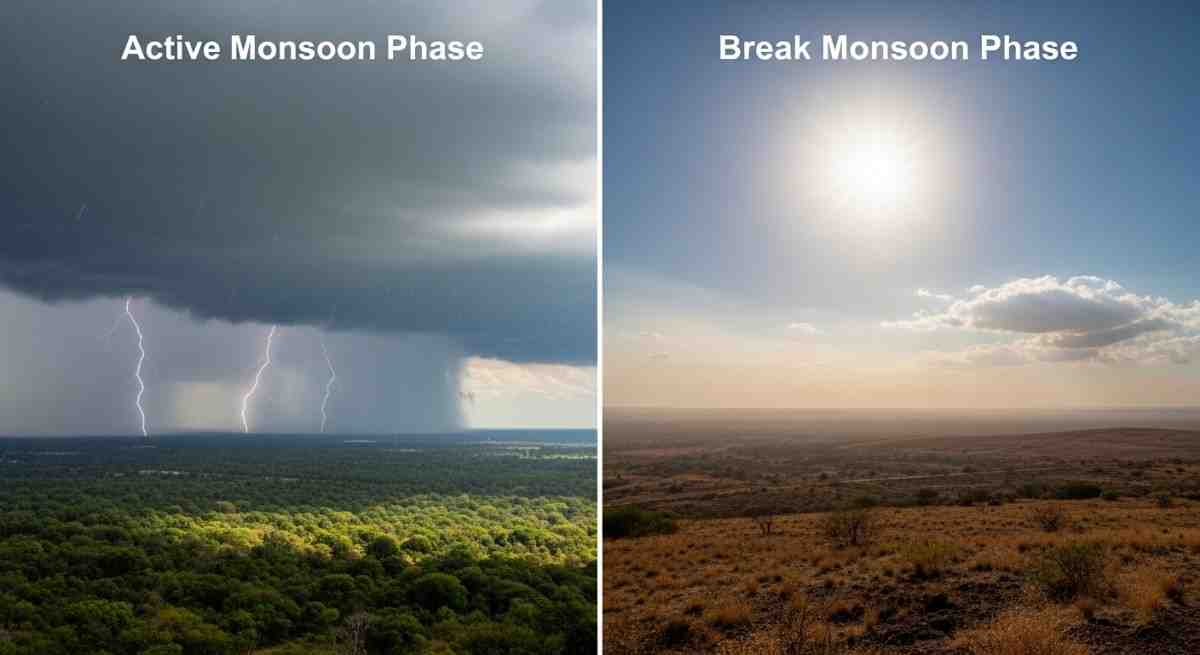
A recent study published in Climate Dynamics has clarified the drivers of moist heatwaves occurring during India’s Southwest Monsoon (SWM). The research establishes that these high-humidity heat events are closely associated with the monsoon’s active and break phases. Importantly, scientists indicate that such events can now be forecast two to four weeks in advance, improving preparedness for heat-related health risks.
Understanding Moist Heatwaves
Moist heatwaves arise from the combined effect of elevated temperatures and high atmospheric humidity, unlike dry heatwaves dominated by temperature alone. Excess moisture in the air hampers evaporation of sweat, limiting the body’s cooling capacity and increasing physiological strain.
This condition can trigger hyperthermia, heat exhaustion and severe heatstroke, particularly during prolonged outdoor exposure.
Wet Bulb Temperature and Human Tolerance
The impact of heat-humidity stress is assessed using wet bulb temperature, which represents the lowest temperature air can reach through evaporation. While 35°C was traditionally considered the maximum survivable threshold, a 2023 study in Nature Communications reported lower tolerance levels, especially among older individuals. Survivability limits ranged from about 25.8°C to 34.1°C for younger adults and were lower for elderly populations.
Monsoon Phases and Geographic Shift
Analysis of data from 1940–2023 shows that moist heatwave risk shifts regionally depending on monsoon dynamics. During active phases, northern and central India face heightened vulnerability due to high humidity and heat. In break phases, risk transitions to southern and eastern India as rainfall migrates northward.
The phenomenon is linked to the Boreal Summer Intraseasonal Oscillation, a 30–90 day atmospheric pattern influencing monsoon variability.
Important Facts for Exams
-
Wet bulb temperature measures combined heat and humidity stress.
-
Southwest Monsoon has active and break phases affecting rainfall.
-
Boreal Summer Intraseasonal Oscillation influences monsoon behaviour.
-
Moist heatwaves differ from dry heatwaves due to high humidity.
Enhanced forecasting can enable authorities to implement early interventions such as cooling centres, hospital readiness and event rescheduling, mitigating climate-related health impacts.
Month: Current Affairs - Mar 01, 2026
Category: Climate Change | Monsoon