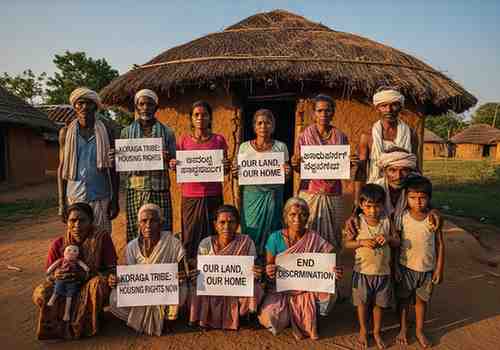
The Koraga tribe is a small but important part of India’s diverse tribal heritage. They have their own language, music, family system, and beliefs. But they face big problems – poverty, discrimination, and lack of proper housing. The UN-Habitat report has now brought their struggle to the world’s attention. It is time for governments, civil society, and citizens to act. The Koraga deserve a safe roof over their heads and a future full of hope.
Exam-Focused Points
-
Koraga tribe – indigenous tribal community found in Karnataka (Dakshina Kannada, Udupi) and Kerala (Kasaragod).
-
Classification – Particularly Vulnerable Tribal Group (PVTG) .
-
Language – Koraga Bhasha (also speak Tulu).
-
Traditional craft – basket-making .
-
Family system – matrilineal (lineage traced through mother).
-
Clan structure – called “bali” .
-
Village leader – Mooppan (most senior person).
-
Musical instruments – dholu (drum) and voote (flute).
-
Religion – follow Hinduism, worship Bhutas (spirits), believe in magic and rituals.
-
Latest news – UN-Habitat World Cities Report 2026 highlighted Koraga’s housing inequality due to caste barriers and policy gaps.
-
Main livelihood – agriculture, forest resources, basket-making.
-
Population – small numbers across Karnataka districts.
FAQ (Frequently Asked Questions)
Q1: In which states is the Koraga tribe mainly found?
A: The Koraga tribe is mainly found in Karnataka and Kerala.
Q2: What is the traditional language of the Koraga tribe called?
A: Their traditional language is called Koraga Bhasha.
Q3: Which traditional craft is the Koraga tribe especially known for?
A: The Koraga tribe is especially known for basket-making.
Q4: What type of family system is followed by the Koraga tribe?
A: The Koraga tribe follows a matrilineal family system, where lineage is traced through the mother.
Q5: What did the UN-Habitat World Cities Report 2026 say about the Koraga tribe?
A: The report noted that entrenched caste barriers and policy gaps deny the Koraga and similar communities access to secure housing, highlighting deep housing inequality.
Month: Current Affairs - May 27, 2026
Category: Tribal Communities, Social Justice