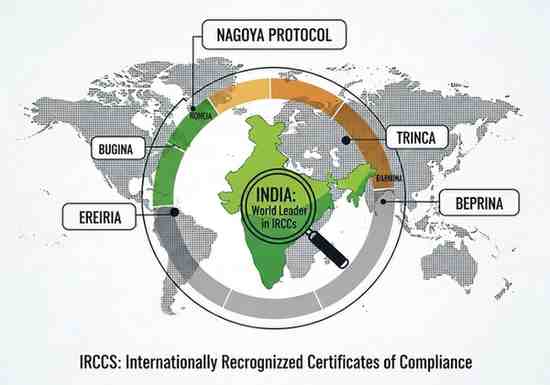
India Issues the Most Global IRCCs Under the Nagoya Protocol
India is now the most important country for issuing Internationally Recognised Certificates of Compliance (IRCCs). It has given out 3,561 certificates, which is more than half of all IRCCs in the world. This shows that India is very serious about protecting biodiversity and making sure that natural resources are used fairly.
India's Place Among Countries
The ABS Clearing-House says that India is much better than other countries. There are 142 registered nations, but only 34 have given out IRCCs so far. India is ahead of countries like France, Spain, Argentina, and Kenya when it comes to following biodiversity rules.
What are the Nagoya Protocol and the IRCCs?
The Nagoya Protocol, which is connected to the Convention on Biological Diversity (CBD), issues IRCCs as official documents. These certificates show that permission has been given to use genetic resources. They also make sure that the user and the provider country share the benefits fairly.
Part in Protecting Biodiversity
IRCCs help keep track of how biological resources are used, from research to making products that people can buy. They make sure that their resources help the people and countries where they live. This system helps protect biodiversity and promotes its responsible use.
Exam-Focused Points
-
IRCC: Proof of legal access to genetic resources
-
Protocol: Nagoya Protocol under CBD
-
India’s share: Over 56% of global IRCCs
-
Law: Biological Diversity Act, 2002
-
Platform: ABS Clearing-House
Institutional Support and Global Importance
India’s success is supported by strong institutions like the National Biodiversity Authority and State Biodiversity Boards. These bodies ensure proper implementation of rules. This achievement strengthens India’s role in global environmental governance and promotes fair and sustainable use of biodiversity.
Month: Current Affairs - April 02, 2026
Category: Environment - Biodiversity