Overview
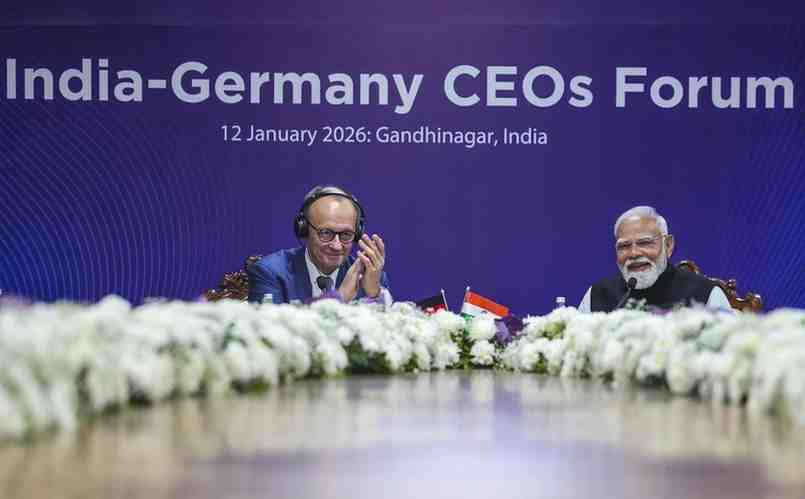
A major education partnership started in January 2026. India and Germany formalised a Comprehensive Roadmap on Higher Education during German Chancellor Friedrich Merz's official visit to India. This roadmap covers everything from joint research to student exchange and even invites German universities to set up campuses in India. For Indian students, this means more affordable access to world-class German education. Let us break down what this roadmap means for students, universities, and the future of India-Germany academic ties.
The Comprehensive Roadmap on Higher Education
The Comprehensive Roadmap on Higher Education is a bilateral framework between India and Germany signed in January 2026. It came out of the diplomatic meetings during German Chancellor Friedrich Merz's visit. Prime Minister Narendra Modi said the roadmap would give "a new direction" to the partnership in education. The roadmap is not just about student exchange. It is a strategic plan covering many areas.
The key focus areas of the roadmap are:
-
Institutional collaboration – Indian and German universities working together more closely
-
Academic exchange – Students and teachers moving between both countries
-
Research partnerships – Joint projects in priority fields like AI, green energy, and healthcare
-
Student mobility – Making it easier for Indian students to study in Germany
-
German language teaching – Expanding German language courses in Indian institutions
-
Preparatory routes – Structured pathways like online Studienkollegs for Indian applicants
The roadmap signals a shift from short-term exchanges to deep, long-term institutional partnerships. It aligns with India's National Education Policy (NEP) 2020, which promotes the internationalisation of Indian higher education.
Why This Roadmap Matters for Indian Students
For Indian students, this roadmap opens many doors. Germany is already a top destination for Indian students. More than 60,000 Indian students currently study in Germany, making them the largest group of international students in the country. But the roadmap takes things further.
One of the biggest announcements was PM Modi's invitation to German universities to establish campuses in India. This would allow Indian students to access German pedagogy and degrees without leaving the country. However, as the DAAD (German Academic Exchange Service) later clarified, there is no immediate push for physical campuses. The focus is more on building deeper collaboration first.
Another big change was visa-free transit for Indian passport holders transiting through Germany. This reduces travel friction for students going to and from Europe. The roadmap also includes skilling priorities, like a National Centre of Excellence for Skilling in Renewable Energy to be established in Hyderabad.
Pathway Programs: German Pathway Program (GPP)
The roadmap laid the ground for new structured pathway programs. One such initiative is the German Pathway Program (GPP), launched by Desh Bhagat University in collaboration with Study Feeds in May 2026.
The GPP is a one-year preparatory programme designed for Indian students who want to study at German public universities. It includes:
Month: Current Affairs - May 22, 2026
Category: International Relations, Education