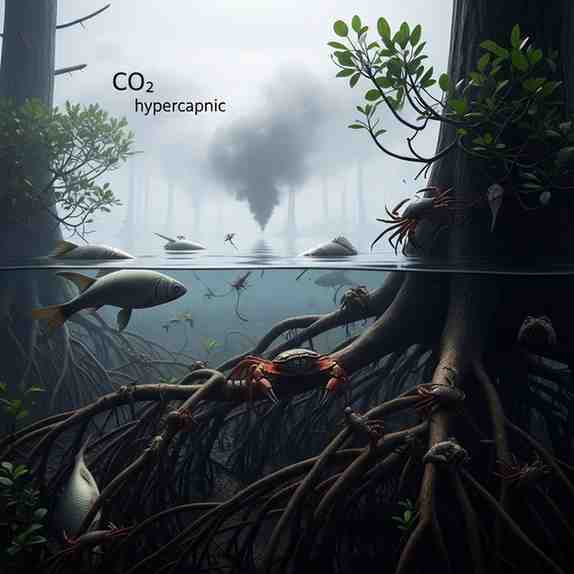
Climate Change Driving Oxygen Decline in Coastal Mangroves
A recent scientific study has raised concern over the spread of hypercapnic hypoxia in mangrove ecosystems worldwide. Driven by rising atmospheric carbon dioxide and increasing temperatures, this phenomenon is pushing coastal environments into a chemically stressful state, threatening biodiversity and livelihoods.
Understanding Hypercapnic Hypoxia
Hypercapnic hypoxia refers to a condition where water bodies experience elevated carbon dioxide (CO₂) levels along with reduced dissolved oxygen. This dual stress creates an unfavourable environment for aquatic organisms. It is commonly observed in mangrove ecosystems during low tide, especially in tropical and low-salinity regions where heat accelerates biological processes.
Causes and Environmental Triggers
The primary drivers of this condition are climate change-induced increases in CO₂ and rising global temperatures. Warmer water holds less oxygen, while higher CO₂ levels alter water chemistry. Reduced water circulation during low tide further worsens oxygen depletion, making estuarine ecosystems highly vulnerable.
Impacts on Biodiversity and Livelihoods
Hypercapnic hypoxia severely affects marine biodiversity. Mangroves serve as fish nurseries, and oxygen depletion reduces habitat quality, leading to declining fish populations and shifts in species composition. Smaller, more tolerant species may dominate, disrupting ecological balance. This has direct economic implications for coastal communities dependent on fisheries.
Significance of Mangroves in Coastal Ecology
Mangroves are vital coastal ecosystems consisting of salt-tolerant vegetation adapted to intertidal conditions. They act as natural buffers against coastal erosion and storms while supporting rich biodiversity. Their role in providing breeding and nursery habitats makes them essential for maintaining marine ecosystems and sustaining livelihoods.
Exam-Focused Points
-
Hypercapnic hypoxia = high CO₂ + low dissolved oxygen.
-
Occurs in mangrove and estuarine ecosystems .
-
Driven by climate change and rising temperatures .
-
Intensified during low tide and poor water circulation .
-
Impacts fish nurseries and biodiversity .
-
Mangroves provide coastal protection and ecological support .
Month: Current Affairs - March 21, 2026
Category: Environment, Climate Change