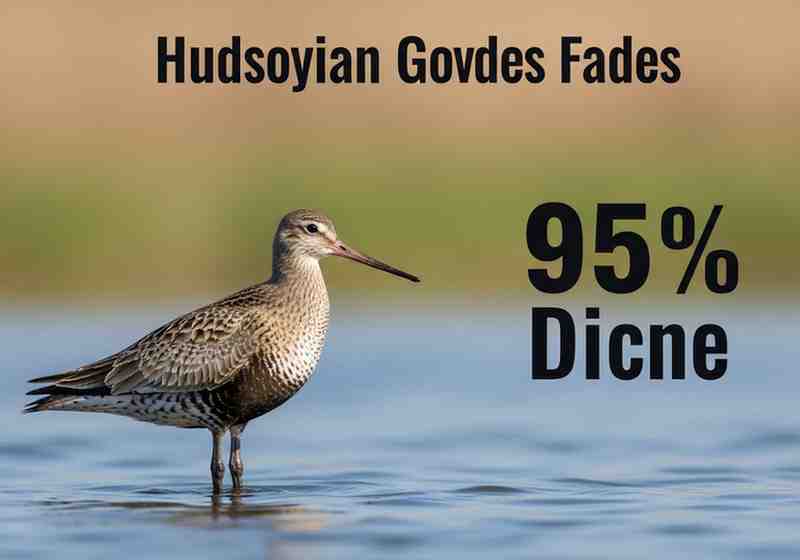
Migratory Shorebird Crisis: Hudsonian Godwit Population Collapse Explained
The Hudsonian godwit is experiencing a severe population decline of nearly 95% over four decades. This alarming trend highlights growing threats to migratory species across continents.
Extraordinary Migration and Unique Traits
The Hudsonian godwit is known for one of the longest migration routes in the animal kingdom, covering nearly 30,000 km annually between Arctic breeding grounds and South America. It can fly up to 11,000 km non-stop without feeding or resting, relying on precise ecological timing and dependable food sources at stopover sites.
Key Drivers of Population Decline
The decline is linked to multiple environmental pressures. In the Arctic, climate change has disrupted synchronisation between chick hatching and peak insect availability. In South America, aquaculture activities have degraded feeding habitats. In North America, agricultural expansion and wetland loss have reduced critical stopover sites, increasing energy expenditure during migration.
Global Conservation Efforts Under CMS
The species is among those proposed for protection under the Convention on the Conservation of Migratory Species. Discussions at the meeting in Pantanal aim to enhance international cooperation for conserving migratory species, safeguarding habitats and ensuring uninterrupted migration routes.
Broader Ecological Implications
The decline of the Hudsonian godwit reflects a wider global pattern affecting migratory species. These species depend on stable environmental conditions across multiple regions, and disruptions at any stage of their journey can have cascading effects. The situation underscores the urgent need for coordinated conservation strategies addressing climate change, habitat degradation and human interference.
Exam-Focused Points
-
Species: Hudsonian godwit (migratory shorebird)
-
Decline: ~95% over 40 years
-
Migration: ~30,000 km annually
-
Key threat: Climate change & habitat loss
-
Treaty: CMS (UN Convention on Migratory Species)
-
Location: Pantanal (Brazil wetland)
Month: Current Affairs - March 26, 2026
Category: Environment, Biodiversity