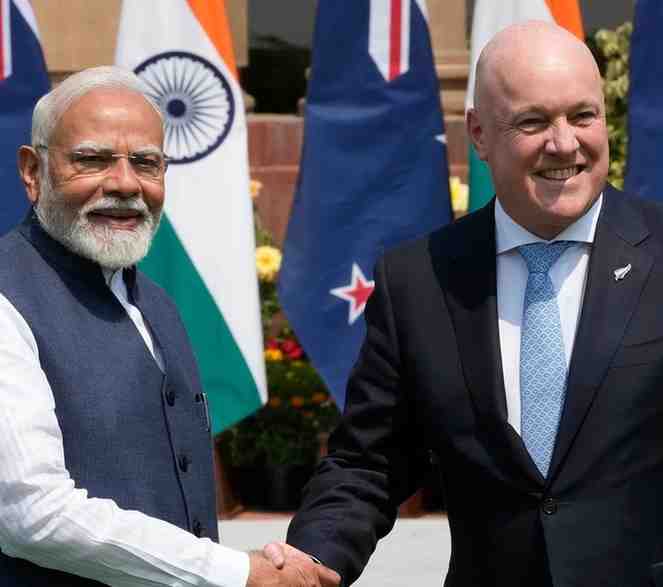
An Economic Landmark in Economic Relations.
A historic Free Trade Agreement (FTA) between India and New Zealand will be officially signed on April 27, 2026, which will mark a significant breakthrough in their bilateral relationship. This agreement will give Indian producers 100% duty-free entry into the New Zealand market. India, in turn, will radically reduce or completely abolish tariffs on 95 percent of goods imported to India, by New Zealand. In the end, the deal is aimed at boosting trade volumes, unlocking new export opportunities, and establishing a more robust strategic relationship between the two countries.
A Record Time in Fast Negotiations.
Stunningly, this FTA is one of the quickest trade agreements that India has ever made. Official talks started in March 2025 and ended smoothly by December 2025 - completing the intricate process in less than a year. This quick decision shows how both governments have an enormous political determination to take their economic interaction to the next level, which forms a very efficient roadmap in subsequent international trade negotiations.
Unleashing Huge Exporter Potential of Indian Exporters.
With the zero-duty policy, all Indian exports to New Zealand will automatically become more competitive. This is a huge triumph to key industries such as textiles, pharmaceuticals, engineering products, agriculture and gems and jewelry. The best beneficiaries will be the small and medium-sized enterprises (SMEs) since the reduced cost of exports will open the way to easier market penetration. The action perfectly coincides with the larger vision of India to increase its exports and become more involved in global supply chains.
Reducing Barriers to New Zealand Imports.
On the other hand, India is opening its gates more by reducing tariffs on 95 percent of existing exports of New Zealand. Some of the major imports set to enjoy include wool, wood and forestry products, machinery and other agricultural products. Some of the dairy is mentioned early, but it is worth remembering in your exams that India has traditionally had shielded some of its sensitive domestic industries (such as dairy) against the impact of large-scale tariff concessions)! The two countries hope that such a moderate solution will create a very predictable and stable business and investor environment.
The Wider Strategic Impact.
Other than tariff cuts, this FTA will be a strategic tool that India uses to increase its economic presence throughout the greater Indo-Pacific. It strongly endorses the Indian plan to diversify its trading partners and not to be too dependent on some of the traditional markets. In the case of New Zealand, the deal opens the doors to an enormous consumer base of one of the fastest-growing major economies of the world. In general, the agreement is a tribute to the active trade policy of India and its priorities in establishing strong, modern international partnerships.
Exam Facts.
-
Definition: FTA (Free Trade Agreement) is an international agreement that is legally binding and is aimed at reducing or eliminating trade barriers (such as tariffs and quotas) among partner countries.
- Timeline: The negotiations were unusually fast, officially starting in March 2025 and ending in December 2025.
- Geopolitical Context: New Zealand is a leading figure in the OECD (Organisation for Economic Co-operation and Development) and a strategic trade partner, particularly in the Indo-Pacific region.
- The most influential figure: Commerce and Industry Minister, Piyush Goyal, led India in terms of trade and negotiations of this historic agreement.
Month: Current Affairs - Apr 27, 2026
Category: Treaties (FTAs)