Overview
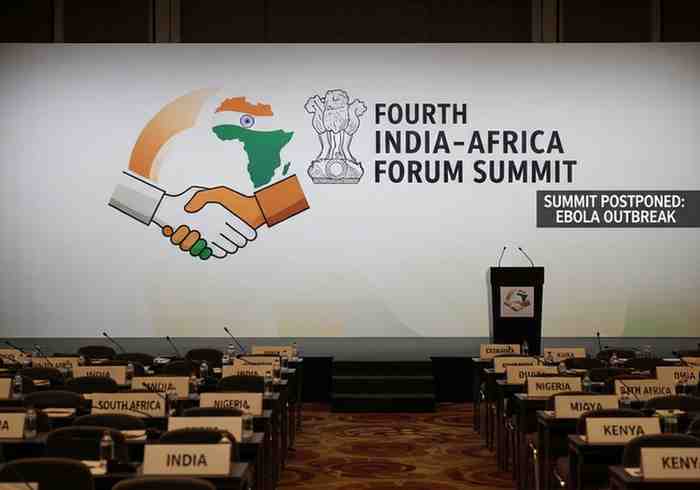
The Fourth India-Africa Forum Summit was scheduled for New Delhi from 28 May to 31 May 2026. But on 21 May 2026, India and the African Union decided to postpone the summit. The reason is an evolving public health situation in parts of Africa. This refers to an Ebola outbreak in the Democratic Republic of Congo and Uganda. The World Health Organization had already declared it a Public Health Emergency of International Concern on 16 May 2026.
Latest News: Summit Postponed
India and the African Union were ready to hold the Fourth India-Africa Forum Summit in New Delhi. The dates were fixed: 28 May to 31 May 2026. But on 21 May 2026, both sides agreed to postpone the event. The reason is clear. There is an Ebola outbreak in two African countries – the Democratic Republic of Congo and Uganda. The public health situation is still evolving. Many African leaders would have traveled to India. The risk of spreading the disease was too high. So both sides chose safety over speed.
What Is the India-Africa Forum Summit?
The India-Africa Forum Summit is a special diplomatic platform. It brings together India and African countries. The goal is to discuss cooperation in trade, development, security, and health. The first summit was held in 2008. The second summit took place in 2011. The third summit was held in New Delhi in 2015. Interestingly, the third summit was also delayed. It was originally scheduled for December 2014. But an Ebola crisis in West Africa forced a postponement. It finally happened in October 2015. Now history is repeating itself. The fourth summit is delayed for the same reason – Ebola.
The Summit’s Link with the African Union
The summit process is closely linked to India’s engagement with the African Union. The African Union is the continent’s main political body. It represents 55 member states. India has always supported African priorities. The summit is a way to show this partnership. The African Union’s specialised public health agency is the Africa Centres for Disease Control and Prevention. India has stated its readiness to contribute to efforts led by this agency.
What Is Ebola Virus Disease?
Ebola virus disease is a severe illness. It is a viral haemorrhagic fever. This means it causes bleeding inside and outside the body. The disease is caused by viruses of the genus Ebolavirus. There are several strains. The current outbreak involves a rare strain called the Bundibugyo strain. The disease spreads through direct contact with:
-
Infected bodily fluids (blood, sweat, vomit, etc.)
-
Contaminated materials (bedding, clothing, needles)
-
Infected animals (bats, monkeys, etc.)
The Bundibugyo strain is rare. And there is a big problem. No vaccine is currently available for this strain. This makes the outbreak more dangerous.
World Health Organization’s Declaration
On 16 May 2026, the World Health Organization (WHO) took a serious step. It declared the Ebola outbreak in the Democratic Republic of Congo and Uganda a Public Health Emergency of International Concern (PHEIC). This is a formal classification under the International Health Regulations (2005). A PHEIC is used for events that need a coordinated international response. It is the highest alert level from WHO. The declaration helps
Month: Current Affairs - May 22, 2026
Category: International Relations