Image

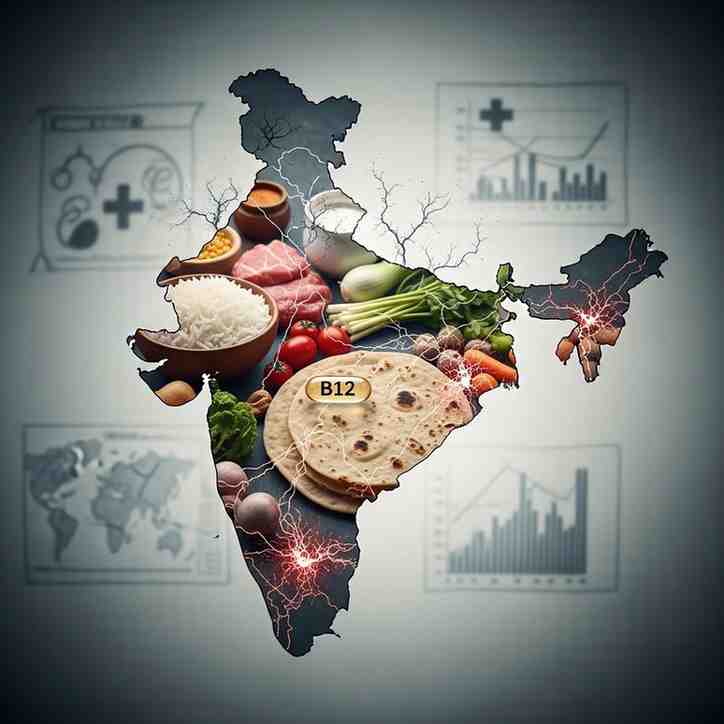
India’s Silent Vitamin B12 Deficiency Crisis: An Overlooked Public Health Challenge

India is facing a largely invisible nutritional crisis—one that manifests not through dramatic outbreaks or epidemics, but through everyday fatigue, memory lapses, numbness, and declining productivity. Vitamin B12 deficiency, often mistaken for stress or ageing, affects a substantial proportion of the population. Studies across regions suggest that nearly one-third to half of Indian adults show biochemical deficiency, with even higher prevalence among the elderly, pregnant women, and vegetarians. Despite its scale, the problem remains underdiagnosed and under-discussed, making it a silent but serious public health concern.

Month: 

Category: 

India Green Energy Bottleneck: How a Lagging Grid Threatens Its Renewable Boom

India’s renewable energy transition is frequently showcased as a global success story. Installed renewable capacity has expanded from about 75 GW in 2015 to nearly 250 GW by 2025, driven by rapid solar and wind deployment, competitive tariffs, and strong political signalling. Yet beneath this impressive expansion lies a structural weakness that now threatens to slow the momentum: India’s electricity grid and transmission infrastructure are not keeping pace with renewable generation. As a result, curtailment is rising, capacity is being stranded, and investor confidence is under strain — turning the grid into the most critical bottleneck in India’s green journey.

Month: 

Category: 

India Union Budget: From Tax Shocks to Strategic Fiscal Planning

For much of independent India’s history, the Union Budget was an annual spectacle of fiscal drama. Tax rates swung sharply, customs duties reshaped industries overnight, and excise hikes on cigarettes or fuel sent markets and consumers scrambling. In recent years, however, this character has changed fundamentally. The Union Budget has evolved from a tax-centric event into a strategic statement of fiscal priorities, expenditure choices and Centre–State relations. While this transformation has reduced headline excitement, it reflects a maturing public finance framework more aligned with long-term economic stability.

Month: 

Category: 

Vehicle-to-Vehicle Communication and India’s Road Safety Transition

India’s decision to introduce Vehicle-to-Vehicle (V2V) communication across its road network by the end of 2026 signals a decisive shift in how the country approaches road safety. Announced after a meeting of State Road Transport Ministers and championed by Union Minister Nitin Gadkari, the initiative aims to move beyond passive safety measures toward real-time, preventive systems that can anticipate danger and warn drivers before accidents occur. In a country that records among the world’s highest road fatalities, the stakes could not be higher.

Month: 

Category: 

The United States’ Exit from Global Climate Institutions: Implications for Multilateral Climate Governance

The decision of the United States under President Donald Trump to withdraw not only from the Paris Agreement but also from the foundational institutions of global climate governance marks an unprecedented rupture in international cooperation. By formally exiting the United Nations Framework Convention on Climate Change (UNFCCC) and the Intergovernmental Panel on Climate Change (IPCC), Washington has stepped away from the core legal and scientific architecture that underpins collective climate action. This move goes far beyond policy disagreement; it challenges the very logic of multilateralism in addressing a global commons problem.

Month: 

Category: