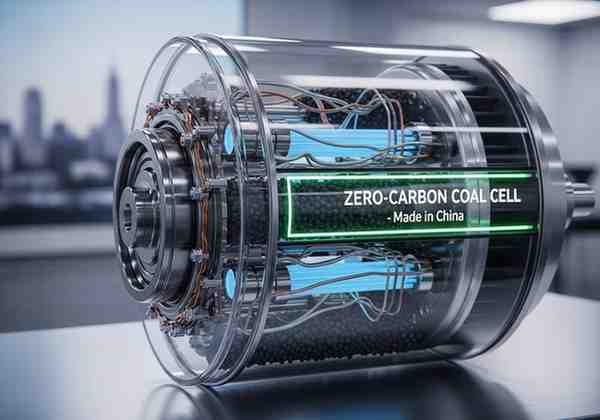
An innovation in coal-based energy.
The scientists of Shenzhen University have invented a new technology which is known as the Zero-Carbon-Emission Direct Coal Fuel Cell (ZC-DCFC) . This new technology allows coal to be directly turned into electricity without combustion, dispelling the long-held belief that coal-derived energy supply should be much more polluting.
Such a technology, when scaled successfully, has the potential to transform the way coal is utilized in the world energy equation and greatly lower emissions.
How the ZC-DCFC System Works
Conventional coal-fired power plants are based on combustion. Another way coal is used is through burning coal to create heat, which creates steam to power turbines and electricity. This is a multi-stage procedure that causes loss of energy and tremendous carbon emissions.
Conversely, the ZC-DCFC system involves electrochemical oxidation :
- Coal is added in the anode chamber.
- Clean carbon is reacted using an oxide membrane.
- Electrical energy is produced directly out of chemical energy.
The process is much more efficient and clean by removing the combustion and the thermal-to-mechanical conversion step in it.
Increased Efficiency over Traditional Plants.
Efficiency is one of the largest benefits of this technology. Because it does not convert energy into heat:
- Energy losses are greatly minimized.
- Theoretical efficiency may be almost double that of the conventional coal plants.
- No big boilers or steam turbines required.
This implies that it is resource efficient and technologically advanced, in the sense that more electricity can be produced with the same amount of coal.
Built-In Carbon Capture Mechanism
One of the main aspects of the ZC-DCFC is on-site capture of carbon. Rather than emitting carbon dioxide to the atmosphere:
- Higher purity of CO 2 is obtained in the process.
- The source of CO 2 is captured on the ground.
- It can be recycled into industrial purposes.
The carbon captured can be changed to advantageous products like:
- A combination of carbon monoxide and hydrogen, known as synthesis gas (syngas) .
- Sodium bicarbonate , is a common industrial product.
The method transforms emissions into useful inputs, which is in line with the idea of a circular economy.
Why This Innovation Matters
Such a technology can be of great benefit to China which is the largest producer and consumer of coal in the world. It proposes a possible route to:
- Lessen emissions without giving up coal.
- Improve energy efficiency
- Promote industrial use
Month: Current Affairs - April 28, 2026
Category: Energy and Environment