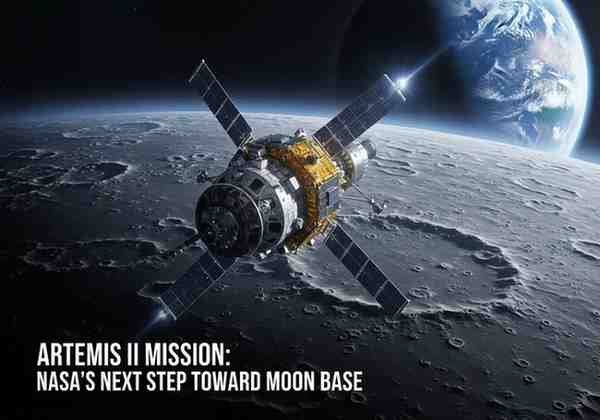
Artemis II: A New Chapter in Lunar Exploration
NASA is preparing for the Artemis II mission, which will send four astronauts around the Moon. This marks humanity’s return to the Moon’s vicinity after more than 50 years since the Apollo programme.
From Exploration to Permanent Presence
Unlike earlier missions that focused on short visits, the Artemis programme aims to establish a long-term human presence on the Moon. NASA plans to build a sustainable base where astronauts can stay for extended periods. This reflects a shift in space exploration—from brief missions to continuous habitation and research.
Mission Roadmap and Future Plans
The programme began with an uncrewed mission in 2022. Artemis II will be the first mission carrying astronauts, orbiting the Moon and returning safely. Future missions will include human landings and regular trips. NASA aims to send missions frequently to transport crew, equipment, and supplies, gradually building a functional lunar base.
Moon as a Gateway to Mars
NASA considers the Moon an important step toward deep space exploration. A lunar base will help test survival technologies, use local resources, and prepare for long-duration missions. This approach is similar to the International Space Station, which supports continuous human presence in space.
Exam-Focused Points
-
Artemis Programme: Return humans to the Moon
-
Artemis II: First crewed mission of the series
-
Apollo 11 (1969): First Moon landing
-
Moon distance: ~384,400 km from Earth
-
ISS orbit: ~400 km altitude
Global Space Race and Cooperation
Many countries are actively working on lunar missions. China plans a human landing by 2030, while India is targeting the next decades. Agreements like the Artemis Accords show growing cooperation, even as global competition in space exploration increases.
Month: Current Affairs - March 31, 2026
Category: Space Exploration