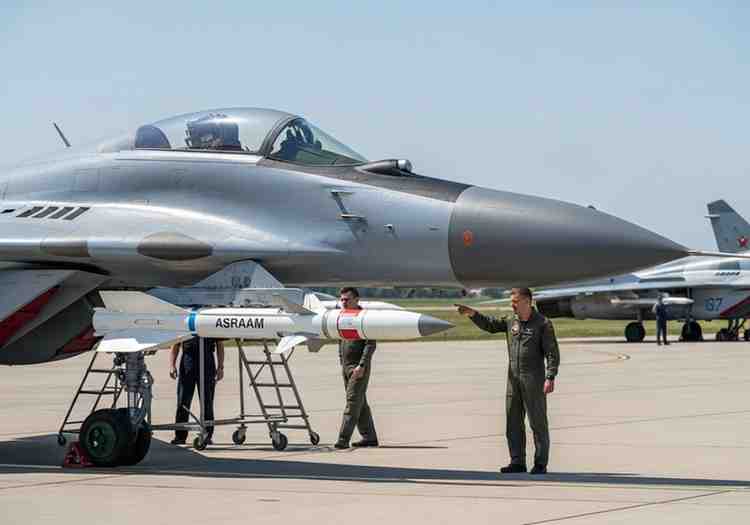
IAF Enhances Combat Capability with ASRAAM Integration
The Indian Air Force is upgrading its MiG-29UPG fighter jet fleet with the Advanced Short Range Air-to-Air Missile. This step is part of broader efforts to modernise legacy aircraft with advanced weapon systems, improving readiness in modern aerial combat scenarios.
Overview of ASRAAM
ASRAAM is a short-range, within-visual-range air-to-air missile developed by MBDA. It is designed for rapid engagement in close combat or dogfight situations. The missile is known for high accuracy, quick response time, and the ability to engage targets at wide angles.
Technical Features and Performance
The missile is about 2.9 metres long and weighs nearly 88 kg. It carries a high-explosive warhead and uses an advanced infrared homing seeker. ASRAAM operates on a fire-and-forget principle, allowing pilots to disengage after launch. It can exceed speeds of Mach 3 and engage targets beyond 25 km, maintaining high agility throughout flight.
Advanced Operational Capabilities
A notable feature is its Lock-On After Launch (LOAL) capability, enabling engagement even before the target is fully locked. This improves tactical flexibility. The missile can withstand high G-forces and track highly manoeuvrable targets, making it effective in complex combat environments.
Exam-Focused Points
-
ASRAAM: Short-range air-to-air missile (MBDA)
-
Guidance: Infrared homing + fire-and-forget
-
Speed: Above Mach 3
-
Range: >25 km
-
Feature: Lock-On After Launch (LOAL)
Strategic Significance for IAF
The integration of ASRAAM will replace older missile systems on MiG-29UPG aircraft, enhancing close-combat effectiveness and first-strike capability. Already deployed on platforms like LCA Tejas and Jaguar, it supports standardisation of advanced weaponry across the force, strengthening India’s air defence preparedness.
Month: Current Affairs - Mar 29, 2026
Category: Defence Technology, Internal Security