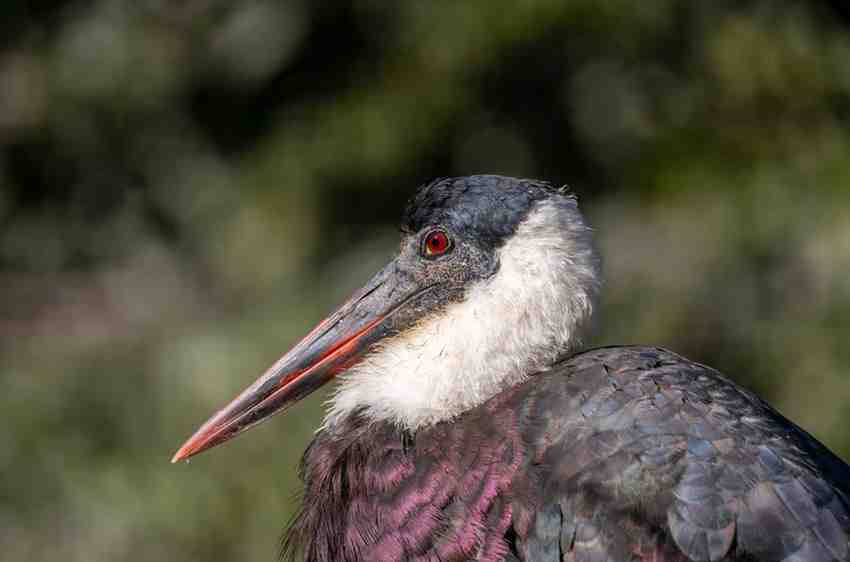
-
Fish
-
Amphibians
-
Reptiles
-
Insects
-
Crabs and molluscs
Its feeding style reflects a low-energy, high-precision hunting strategy , typical of large waders.
Flight Pattern
-
Uses thermals (rising warm air) to glide long distances
-
Conserves energy rather than constant flapping
-
Indicates dependence on open landscapes
Ecological Role: More Than Just a Bird
The Woolly-Necked Stork plays a functional role in ecosystems:
-
Controls populations of aquatic organisms and pests
-
Acts as an indicator species for wetland health
-
Links agricultural systems with natural food webs
Its presence in farmland highlights a key idea:
biodiversity doesn’t survive only in protected areas; it also depends on how we manage everyday landscapes.
Why It Is Under Threat
Despite its wide range, the species is declining.
Major Pressures
-
Wetland loss due to urbanisation and land conversion
-
Agricultural intensification (pesticides, monocropping)
-
Water management changes reducing shallow feeding zones
Subtle but Critical Issue
Even when wetlands exist, their quality may degrade :
This is why sightings like those in Thanjavur are significant. They suggest that some ecological balance still remains intact locally .
Conservation Insight: What This Sighting Tells Us
The Thanjavur observation is not random. It signals:
-
Agricultural landscapes can support near-threatened species
-
Traditional or low-intensity farming may be biodiversity-friendly
-
Conservation must extend beyond national parks to “working ecosystems”
In practical terms, protecting such species requires:
Month: Current Affairs - April 12, 2026
Category: Environment | Biodiversity