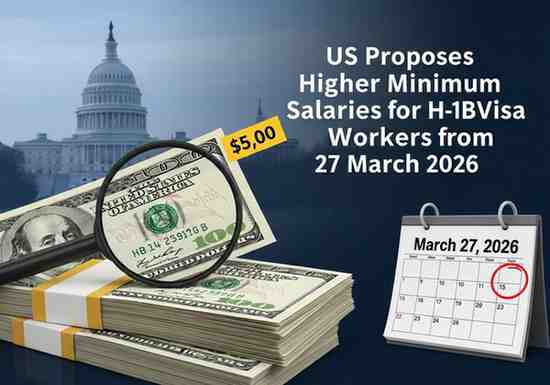
Within three years, the annual cost could rise to $43 billion if most existing H-1B visas are renewed at higher wage levels
FAQ
Q1: When did the US Department of Labor issue the proposed rule?
A: On 27 March 2026.
Q2: Which visa programmes does the proposal cover?
A: H-1B, H-1B1, E-3, and PERM labour certification programmes.
Q3: What is the full title of the proposed rule?
A: Improving Wage Protections for the Temporary and Permanent Employment of Certain Foreign Nationals in the United States.
Q4: Why does the Department of Labor want to raise wages?
A: Because the existing wage levels were fixed about 20 years ago and are now outdated.
Q5: What is the new percentile for Level I (entry level)?
A: From 17th percentile to 34th percentile.
Q6: What is the new percentile for Level IV (most experienced)?
A: From 67th percentile to 88th percentile.
Q7: What is the proposed minimum salary for an entry-level software engineer in San Francisco?
A: About $162,000 per year.
Q8: Until when can the public submit comments?
A: Until 26 May 2026.
Q9: What presidential action led to this proposal?
A: A presidential proclamation issued on 19 September 2025.
Q10: How much could this proposal cost employers in the first year?
A: At least $18 billion.
Exam-Focused Points
-
Proposed rule date: 27 March 2026
-
Issuing body: United States Department of Labor
-
Programmes covered: H-1B, H-1B1, E-3, PERM
-
H-1B visa use: Non-immigrant work visa for speciality occupations (IT, engineering, research)
-
Current problem: Wage levels fixed for about 20 years (outdated)
-
Level I change: 17th → 34th percentile
-
Level IV change: 67th → 88th percentile
-
Example salary (San Francisco entry-level software engineer): ~$162,000/year
-
Example salary (New York): ~$132,000/year
-
Example salary (Dallas): ~$113,000/year
-
Public comment deadline: 26 May 2026
-
Presidential proclamation date: 19 September 2025
-
First-year cost estimate: At least $18 billion
-
Three-year cost estimate: Up to $43 billion annually
-
H-1B1 visa applies to: Nationals
Month: Current Affairs - May 10, 2026
Category: US Immigration Policy