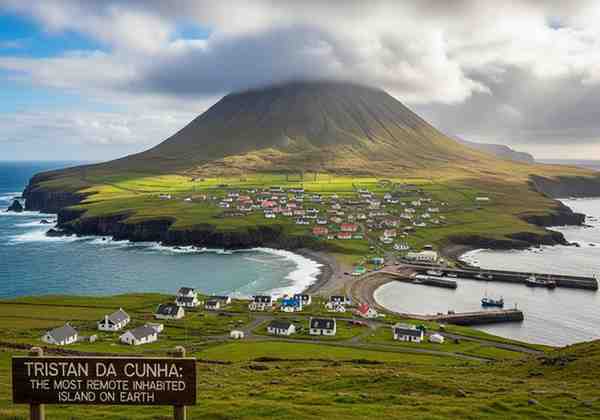
South America
Origin: Volcanic
Discovered in: 1506 by Portuguese explorer Tristão da Cunha
Status: British overseas territory
Famous for: Most remote inhabited chain of islands in the world
Main settlement: Edinburgh of the Seven Seas
Population: About 250 permanent residents
No airstrip: Only reachable by boat or helicopter
Land ownership: Communally owned; outsiders cannot buy land
Main economic activities: Farming (communal), government jobs, commercial fishing
Other islands: Gough, Inaccessible (UNESCO World Heritage Site), Nightingale, Stoltenhoff, Alex
Recent event: British military medics parachuted to help a hantavirus suspect from MV Hondius cruise ship
FAQ
Q1: What is Tristan da Cunha?
A: It is a group of islands in the South Atlantic Ocean. It is also the name of the largest island in that group.
Q2: Why is Tristan da Cunha considered the most remote inhabited place on Earth?
A: Because it is very far from any mainland. The nearest land is thousands of kilometers away. There is no airstrip, and only boats or helicopters can reach it.
Q3: Which country does Tristan da Cunha belong to?
A: It is a British overseas territory. So it belongs to the United Kingdom.
Q4: Can an outsider buy land on Tristan da Cunha?
A: No. Land is communally owned. Outsiders cannot settle or buy land there.
Q5: What was the recent medical emergency on the island?
A: A UK national from the cruise ship MV Hondius was suspected of having hantavirus. British military medics parachuted to the island to help him.
Month: Current Affairs - May 12, 2026
Category: TristanDaCunha