Overview
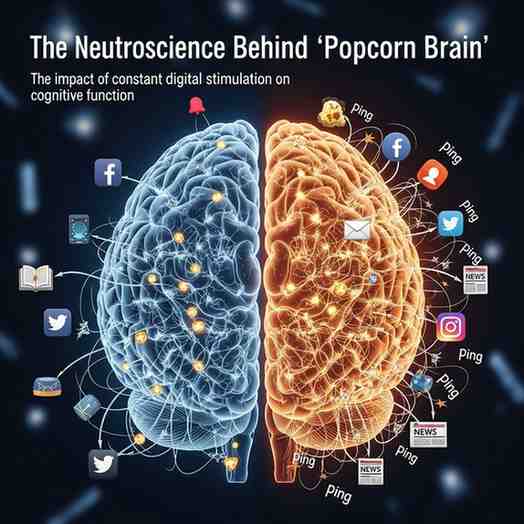
“ Popcorn brain ” is a modern term describing the brain’s overstimulation from constant digital engagement —short videos, notifications, and endless scrolling. This leads to a restless mind, reduced attention span, and impatience with slower activities like reading or conversation.
Meaning of ‘Popcorn Brain’
-
The term compares the brain to popcorn kernels—constantly “popping” with new digital stimuli instead of engaging in deep, sustained thought.
-
Offline, this causes agitation, distraction, and the compulsive urge to check screens.
-
Over time, calm moments feel uncomfortable , and the need for stimulation increases .
Neuroscience Behind It
-
Notifications and feeds trigger quick dopamine releases , reinforcing the urge to check phones frequently.
-
App-hopping fragments working memory and builds a habit of rapid task-switching .
-
The prefrontal cortex , which governs focus and self-control, gets overridden by reward-seeking circuits .
-
Blue light and late-night screen time disturb circadian rhythms, worsening attention and mood the next day.
Impact on Mood, Sleep, and Learning
-
When stimulation stops, people may feel anxious or restless , reflecting digital dependency .
-
Sleep quality declines due to delayed bedtime and disrupted melatonin cycles.
-
Adolescents —whose brains are still developing—face heightened risk of poor focus, emotional instability, and lower academic performance .
-
Adults report irritability, burnout, and decision fatigue from scattered attention.
Exam-Oriented Facts
-
“ Popcorn brain ” = overstimulation from rapid digital content.
-
Causes dopamine-driven checking behaviour and weakens sustained attention.
-
Teens are more vulnerable due to ongoing prefrontal cortex development.
-
Linked to sleep loss, anxiety, poor concentration , and digital burnout .
-
Preventive steps: screen-free meals, bedtime cut-offs, and reduced notifications.
Ways to Restore Focus
-
Keep phones out of bedrooms and avoid screens one hour before sleep .
-
Batch notifications instead of checking continuously.
-
Use app timers and greyscale mode to reduce visual reward cues.
-
Replace micro-scrolls with micro-breaks (stretching, breathing, short walks).
-
Schedule deep-work blocks (25–50 minutes) with “Do Not Disturb” mode.
-
Introduce analogue activities —reading, journalling, or walking without devices.
-
Families can set shared tech curfews and device parking spots to build healthier digital habits.
-
If screen dependency affects mood or work, seek clinical or behavioural therapy support.
In Summary
“Popcorn brain” illustrates how excessive digital stimulation rewires attention and reward circuits , diminishing focus and patience. Simple, consistent boundaries and conscious offline routines can retrain the brain toward calm, deep concentration.
Month: Current Affairs - Nov 03, 2025
Category: Science and Technology