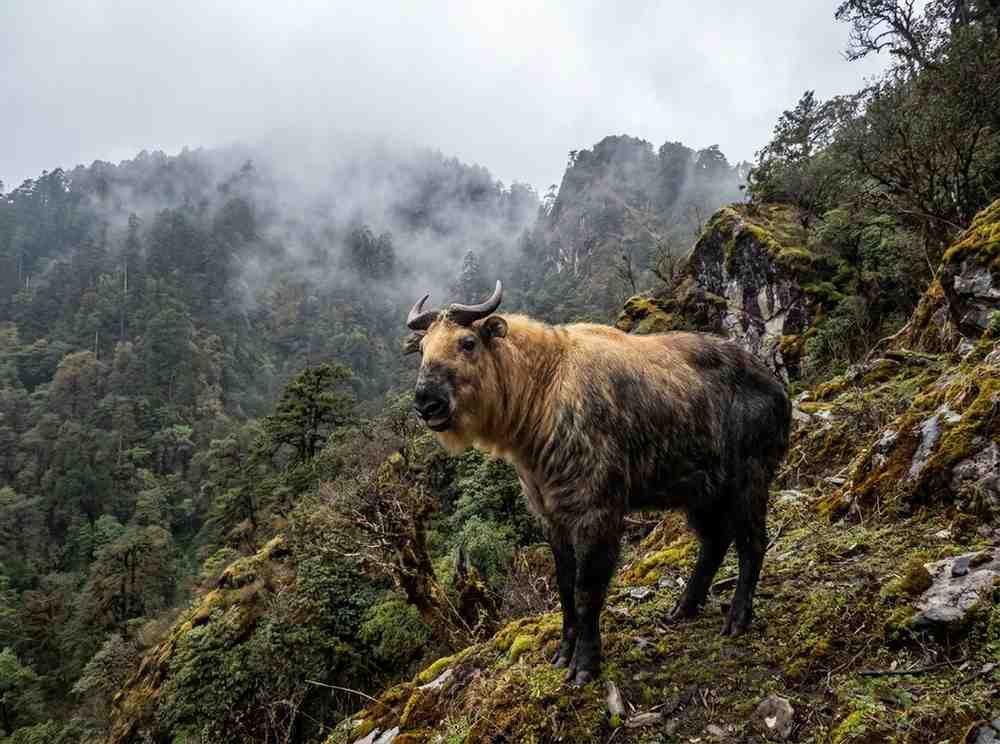
Changing temperatures can alter mountain ecosystems.
Hunting
Illegal hunting remains a threat in some regions.
Habitat Fragmentation
Breaking forests into smaller areas limits movement and breeding opportunities.
These challenges highlight the need for continued conservation efforts.
Importance of the Recent Discovery
The recent video recording of a herd in North Sikkim is significant.
It provides valuable information about the species.
The footage helps researchers:
- Monitor population health
- Study behaviour
- Understand habitat use
- Improve conservation planning
Such discoveries also increase public awareness about rare Himalayan wildlife.
Conclusion
The Mishmi Takin is one of the most fascinating mammals of the Eastern Himalayas. Its strong body, thick coat, and mountain adaptations allow it to survive in some of the harshest environments on Earth. The recent recording of a herd in North Sikkim highlights the importance of protecting this rare species. Continued conservation efforts will help ensure that the Mishmi Takin remains a part of the Himalayan ecosystem for future generations.
Exam-Focused Points
- Mishmi Takin is a species of goat-antelope.
- Scientific name: Budorcas taxicolor .
- It belongs to the family Bovidae.
- It is one of four subspecies of Takin.
- It is native to the Eastern Himalayas.
- It is found in Arunachal Pradesh, Tibet, Myanmar, and China.
- The species is named after the Mishmi Hills of Arunachal Pradesh.
- It lives at elevations up to 4,500 metres.
- It has a golden-yellow to dark brown coat.
- Both males and females possess horns.
- It is a herbivorous and folivorous animal.
- It lives in small family groups.
- IUCN Red List Status: Vulnerable .
- First video footage of a herd was recently recorded in North Sikkim.
Frequently Asked Questions (FAQs)
Q1. What is the Mishmi Takin?
The Mishmi Takin is a large goat-antelope species found in the Eastern Himalayas.
Q2. What is the scientific name of the Mishmi Takin?
Its scientific name is Budorcas taxicolor .
Q3. Where is the Mishmi Takin found?
It is found in Arunachal Pradesh, northern Myanmar, southeastern Tibet, and parts of China.
Q4. What type of habitat does the Mishmi Takin occupy?
It lives in forested valleys, mountain forests, alpine meadows, and rocky high-altitude regions.
Q5. What is the conservation status of the Mishmi Takin?
The Mishmi Takin is classified as Vulnerable under the IUCN Red List.
Month: Current Affairs - Jun 19, 2026
Category: Wildlife Conservation