Overview
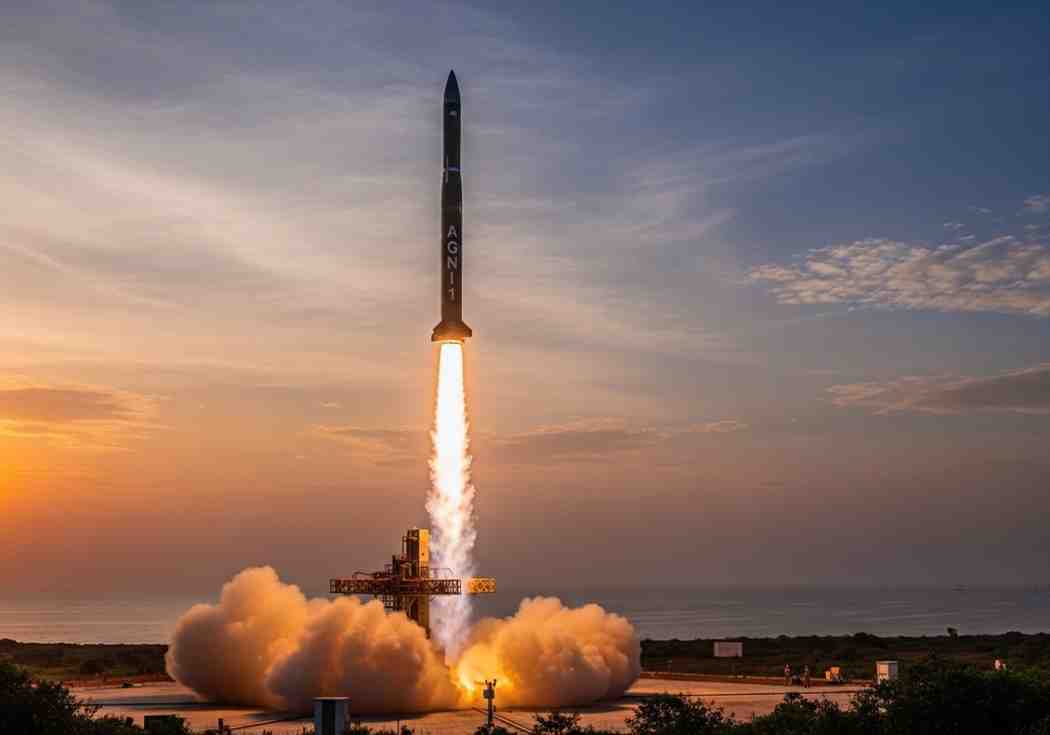
On 22 May 2026, India successfully test-launched the Agni-1 short-range ballistic missile. The test was conducted from the Integrated Test Range at Chandipur in Odisha. The Strategic Forces Command, which manages India’s nuclear arsenal, oversaw the launch. The Agni-1 missile is a single-stage, solid-fuelled, road-mobile system. It has a strike range of 700-900 km and can carry a payload of up to 1,000 kg. The test validated all operational and technical parameters of the missile.
Latest News: Agni-1 Test Launch on 22 May 2026
India’s defence capabilities got a strong boost on 22 May 2026. The Agni-1 missile was successfully test-fired from the Integrated Test Range at Chandipur in Odisha. The launch took place under the supervision of the Strategic Forces Command. This command is responsible for India’s strategic nuclear weapons. The test was part of routine training and validation drills. Scientists and defence personnel monitored every moment of the launch. The missile performed exactly as expected. It followed its intended path and met all mission goals.
What Is the Agni-1 Missile?
Agni-1 belongs to India’s famous Agni family of ballistic missiles. The Agni series includes several missiles with different ranges and payload capacities. These missiles form the backbone of India’s land-based strategic deterrent. They are designed for both conventional and nuclear delivery roles. Agni-1 is the short-range member of this family. It is a single-stage missile, meaning it has only one propulsion stage. It uses solid fuel, which makes it easier to store and launch quickly. The missile is also road-mobile. This means it can be moved on trucks to different locations, making it hard for enemies to track.
Technical Features of Agni-1
| Feature |
Details |
| Type |
Short-range ballistic missile (SRBM) |
| Stages |
Single-stage |
| Fuel |
Solid propellant |
| Mobility |
Road-mobile (can be transported by truck) |
| Strike range |
700 – 900 km |
| Payload capacity |
Up to 1,000 kg |
| Warhead capability |
Conventional or nuclear |
The missile is designed for quick reaction. It can be fired within minutes of receiving orders. Its accuracy and reliability have been proven through many tests over the years.
Where Was the Test Conducted?
The test took place at the Integrated Test Range (ITR) in Chandipur, Odisha. ITR is a missile testing facility located on the east coast of India. It is used for testing various surface-to-surface and other missile systems. The range has advanced tracking radars, telemetry stations, and safety systems. The location is ideal
Month: Current Affairs - May 23, 2026
Category: Defence, Science - Technology