Overview
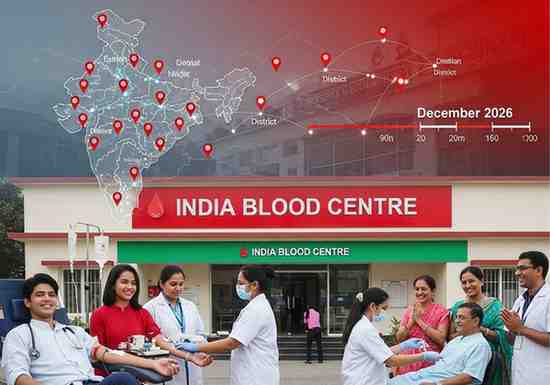
India has established a national objective of ensuring that at least one blood centre in every district is in place, by December 2026, to provide timely access to safe blood, and reduce the risks associated with transfusion. A recent survey by the Ministry of Health and Family Welfare showed that almost 10 percent of the districts are still without a blood centre, which is revealing some important gaps in the healthcare infrastructure.
Why the Review Was Conducted
A countrywide evaluation of blood transfusion services was carried out by the government by consulting with states and Union Territories. The review considered five main elements:
- Regulatory compliance and licensing.
- Blood collection and screening of donors.
- Transfusion-transmitted infections (TTIs) testing.
- Processing and storage systems.
- Data management and reporting.
The measurement of performance was in the form of indicators relying on platforms such as eRaktKosh, BBMS, and Central Drugs Standard Control Organisation.
Key Gaps Identified
The review pointed out a number of systemic problems:
- Lack of blood centres in various districts.
- Lax licensing and regulation procedures.
- Poor connectivity to digital systems.
- Differences in voluntary blood donations.
- Weak referral systems of infected donors.
These loopholes make blood services less efficient, transparent, and safe.
Government’s Priority Actions
The government, headed by National AIDS Control Organisation, has proposed the following key reforms:
- Achieve 100% licensing compliance
- Enhance administrative accountability on a district level.
- Standardise procedures of blood donation camp.
- Increase voluntary blood donation programs.
- Minimize transfusion-transmitted infections.
Voluntary Blood Donation is important.
Voluntary blood donation is regarded as the most sure and safe way to donate blood. The awareness creation, development of the public confidence, and institutional involvement such as in colleges and workplaces are necessary to achieve national objectives and health outcomes.
Exam-Focused Key Points
- Goal: 1 blood centre/district by Dec 2026.
- approximately 10% districts do not have blood centres.
- India has a blood management system called eRaktKosh.
- TTIs are HIV, Hepatitis B and C.
- NACO is at the head of blood safety activities.
MCQ
Q1. What is the main aim of the India plan in having one blood centre per district?
Month: Current Affairs - April 22, 2026
Category: Health | Public Health